
Work Text:
Introduction: Summary of the Yuri Triangle (maolong, 2024)
In 2024, tumblr user maolong created a post defining the Yuri Triangle:
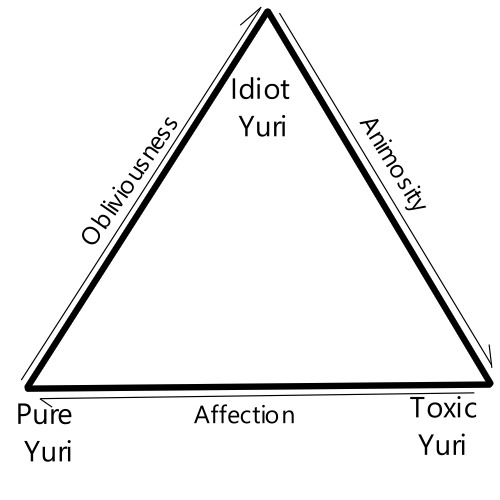
maolong, 2024
Each point is a subtype of Yuri within the Yuri genre; each side is presented as a primary trait that further defines and is necessary to its respective subtype. As the primary trait increases, the corresponding subtype is further reinforced. I highly recommend reading the original post to understand its full scope, but for the sake of this post I'll summarize the operational definitions maolong (2024) provides.
Pure Yuri is described as relationships with mutually known and reciprocated feelings that include genuine affection. Works considered Pure Yuri will focus on the relationship between characters being "uniquely pure". In this case, purity does not necessarily include a romantic relationship, a lack of eroticism, or a happy ending; I like to think of the pure in Pure Yuri in both the 'untarnished' sense and in the 'concentrated strength' sense. Currently, its corresponding primary trait is Affection: "the degree to which the participants in a yuri relationship show and express their fondness for one another in a healthy way."
Idiot Yuri is described as relationships lacking clarity between characters. This lack of clarity can come from personal inability to self-reflect (e.g. low self-awareness, willful self-deception) or from a social conditioning of internalized homophobia (e.g. being ignorant of or averse to same-gender attraction). Idiot Yuri is resolved through clarifying "the nature of one character’s desire and/or opinions for the other involved character in the Yuri relationship". The corresponding primary trait is Obliviousness: "lack of awareness the participants have to the nature of their desires and/or the other['s] desires."
Toxic Yuri is defined as relationships that are toxic, "not always as a product of issues between the people in the relationship, but sometimes factors outside of the relationship such as issues with health or from society." As in, physical and/or emotional abuse may be absent in the relationship itself, but a hostile environment reinforces maladaptive functioning or necessitates extreme behavior. The corresponding primary trait to Toxic Yuri is Animosity: "the degree to which hostility occurs in the relationship as a result of their relationship and/or surrounding circumstances of it."
Further Analysis: Strengthening the Most Elegant Shape
Using established definitions provided by maolong (2024) for Idiot Yuri, Pure Yuri, and Toxic Yuri (with some adjustments), I am of the opinion that this triangle is a near-perfect distillation of Yuri. Although Yuri comes in many different forms and executions, all Yuri will fall somewhere in relation to the spectrum of these general categories. What I find most compelling about this triangle is the function of its sides. Let's take another look at it:
maolong, 2024 (again)
It is established that each point of the triangle is positively correlated with the side labeled as its primary trait (Idiot:Obliviousness, Toxic:Animosity, Pure:Affection). But consider—the vertices of a triangle connect to two sides. I believe each connecting side can be seen as a complementary trait that is also relevant in describing: 1. each subtype, and 2. the spectrum between subtypes.
For Idiot Yuri, its primary trait is already established as Obliviousness; the complementary trait would therefore be Animosity. With that, Animosity serves as a connection between Idiot Yuri and Toxic Yuri, and we can now recognize how Idiot Yuri includes the intersection of Obliviousness and Animosity. This can be illustrated by the classic 'get out of my school' dynamic:

Tweet by @Lindzeta
In addition, each subtype is reinforced by the absence of the side opposite to it, the oppositional trait. The more present an oppositional trait is, the more absent its oppositional Subtype will be. For example, the absence of Obliviousness is a defining feature of Toxic Yuri. The presence of Obliviousness will lead to the absence of Toxic Yuri because some degree of targeted malice is pivotal to maintaining Toxic Yuri; there is an intentionality and focus which elevates antagonism to the heights of Animosity.
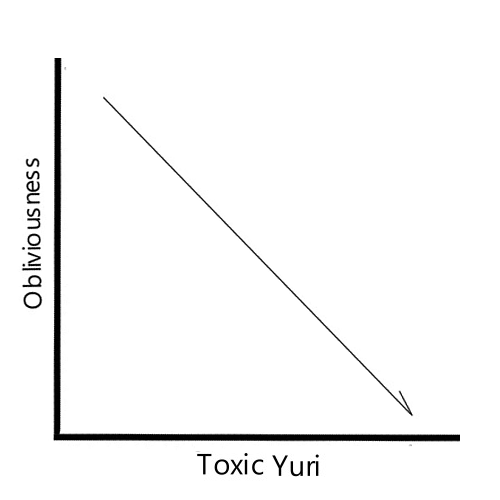
This, too, is a Yuri Triangle
Alas, when utilizing the current operational definitions for the Yuri Triangle there are three issues with this construction. I'll start with the simplest one: in the current definition of Pure Yuri, the inclusion of 'known' feelings contradicts coexistence with the complementary trait of Obliviousness—a lack of knowledge. This can be resolved by shifting the definition of Pure Yuri from 'known' feelings to 'acknowledged' feelings; a feeling that is not identified or labeled can still be recognized as significant, after all.
The second issue is that the current definition of Idiot Yuri—a relationship that lacks clarity—needs to be more distinct. After all, both Pure Yuri and Toxic Yuri can lack clarity and be heavily ambiguous. As stated above, a Pure Yuri relationship can ambiguous in that the emotions are unclear but the relationship is acknowledged and reciprocated; the tentative and delicate atmosphere from struggling to clarify a relationship does not result in the conflict or comedy that typically characterizes Idiot Yuri. Such is the case in Koi yori Aoku (translated as A Love Yet to Bloom), where Tsukasa Takamine and Shiori Sakura enter a grounded and transformative friendship without awareness of the love yet blooming between them. For Toxic Yuri, ambiguity can stem from obfuscation of emotions or motivations—in Revolutionary Girl Utena, Juri conceals her true feelings for Shiori while Shiori denies her own feelings for Juri, leading to their dysfunctional dynamic—or from the complexities of navigating extreme situations—in Bakajo 26-ji (translated as Stupid Woman 26:00), Atsuko kills Yuri's abusive husband and they end up on the run together despite the two of them essentially being strangers at this point in their lives.
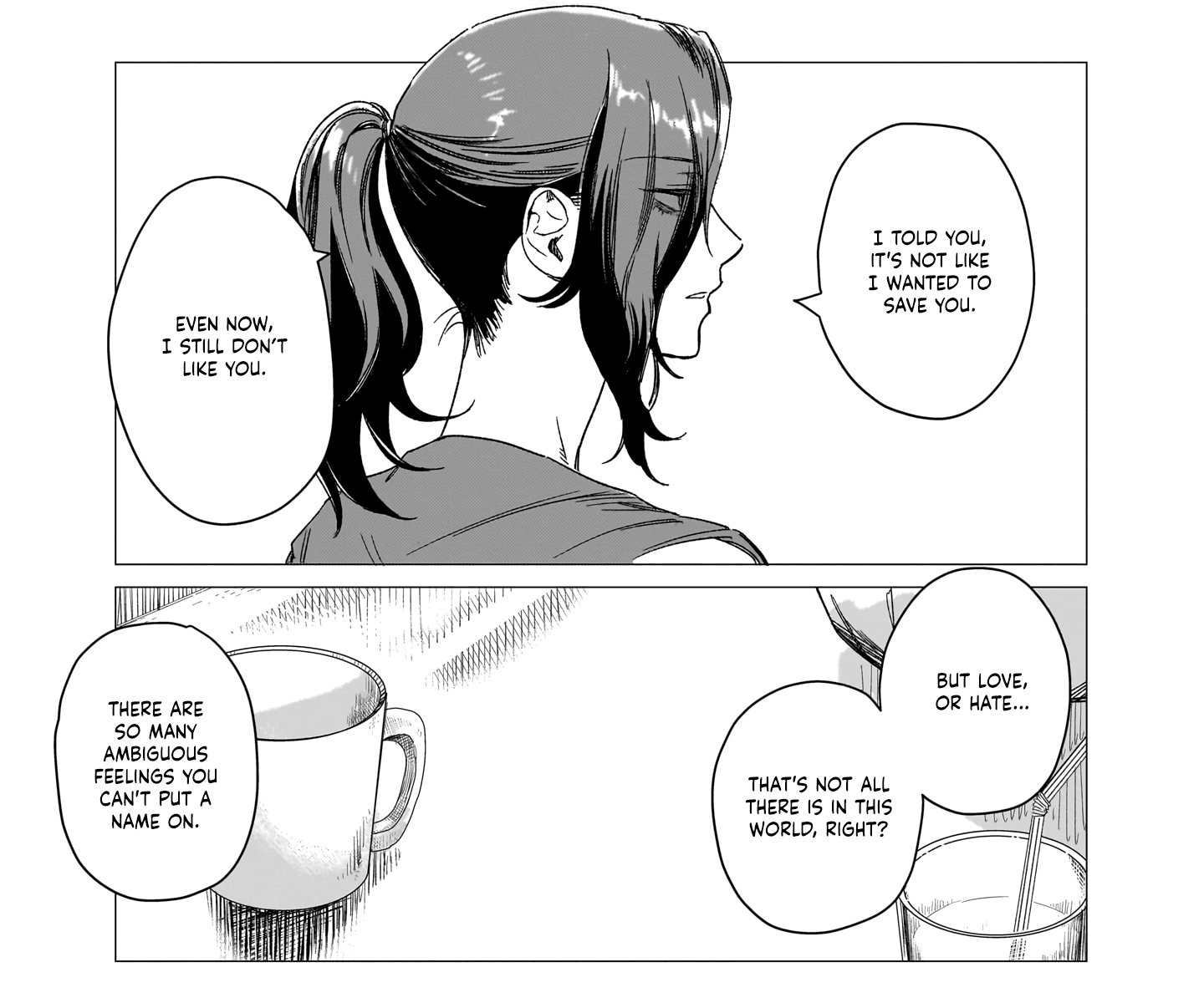
Bakajo 26-ji, Chapter 1
I would therefore like to define Idiot Yuri more specifically as 'relationships where a lack of clarity inadvertently causes misunderstandings and/or conflict', and Obliviousness more broadly as 'a powerful ignorance of the self, other, or situation'. This hopefully specifies how the lack of clarity in Idiot Yuri creates self-inflicted drama, sometimes stemming from or resulting in a punchline.
The third issue is much more substantial. While Affection could fit as a possible primary trait for Pure Yuri (there is no Pure Yuri without some degree of Affection), it does not complement Toxic Yuri with the strength that Animosity complements Idiot Yuri; further, Affection does not oppose Idiot Yuri with the strength Obliviousness opposes Toxic Yuri.
The compelling intersection between Obliviousness and Animosity is what creates such a strong complement. Within the definition of Idiot Yuri, there is no specific inclusion or exclusion of Animosity; however, Animosity features prominently in many works within Idiot Yuri. In Hana to Hoshi (translated as Flower and Star) there is Sawako Hanai’s one-sided table tennis rivalry with Shiori Hoshino, in 5 Seconds Before a Witch Falls in Love there is Meg and Lilith's mutual conflict between witch and witch hunter, and so on. Many Idiot Yuri works have Animosity present without the relationship or the world around the characters being dysfunctional or abusive. In this way, Animosity is complementary to Idiot Yuri.
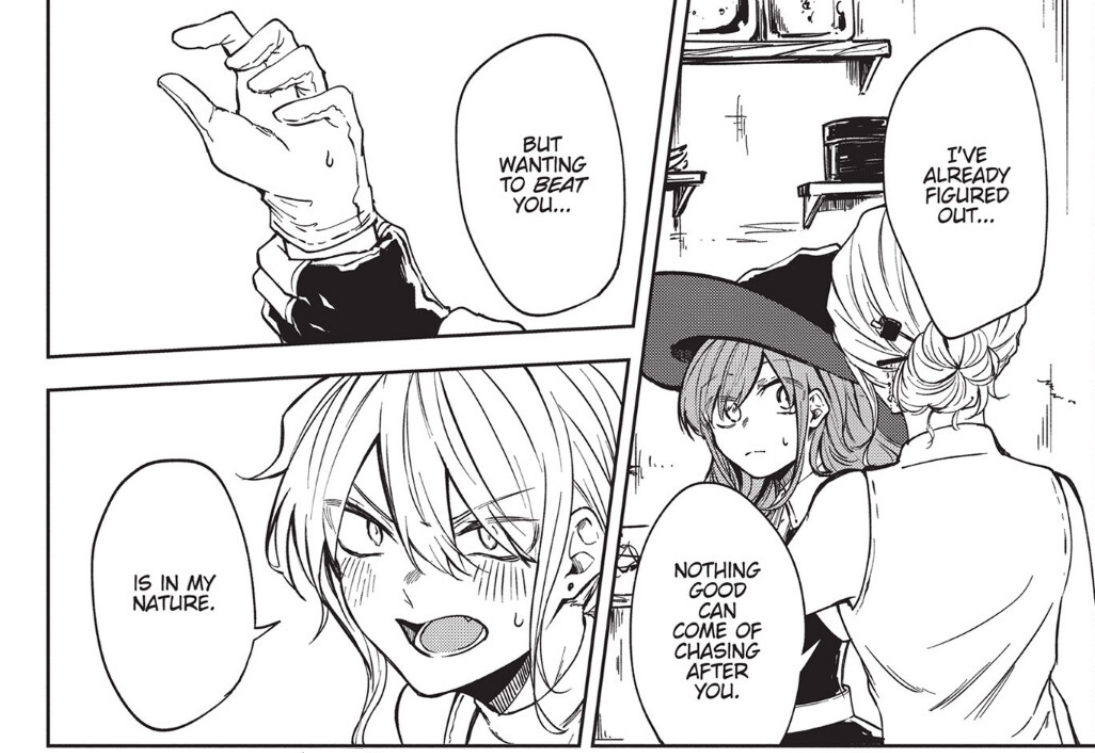
5 Seconds Before a Witch Falls in Love, Chapter 1
On the other hand, the definition of Toxic Yuri inherently creates difficult conditions for Affection; the overlap isn't impossible per se, but even if characters have a loving relationship, the unhealthy environment guaranteed by Toxic Yuri will impede healthy attachment. In The Chrono Jotter, Ran Ibuki and Ann Sakura have a reciprocal romantic relationship lacking any Animosity between them (after getting together). However, outside circumstances continuously reinforce obsession and codependency; while they are to some extent Affectionate, it cannot be said to be expressed in a particularly healthy way. Meanwhile, in Yuujin no Sougi (translated as Funeral for a Friend), after 70 years of sustained rivalry septuagenarians Sae and Mei are able to express a single instance of Affection, which devolves into conflict. Affection does not exist in concert with Toxic Yuri the way Animosity can with Idiot Yuri; it's often difficult to sustain. Therefore, Affection does not fulfill the role as a complementary trait for Toxic Yuri.
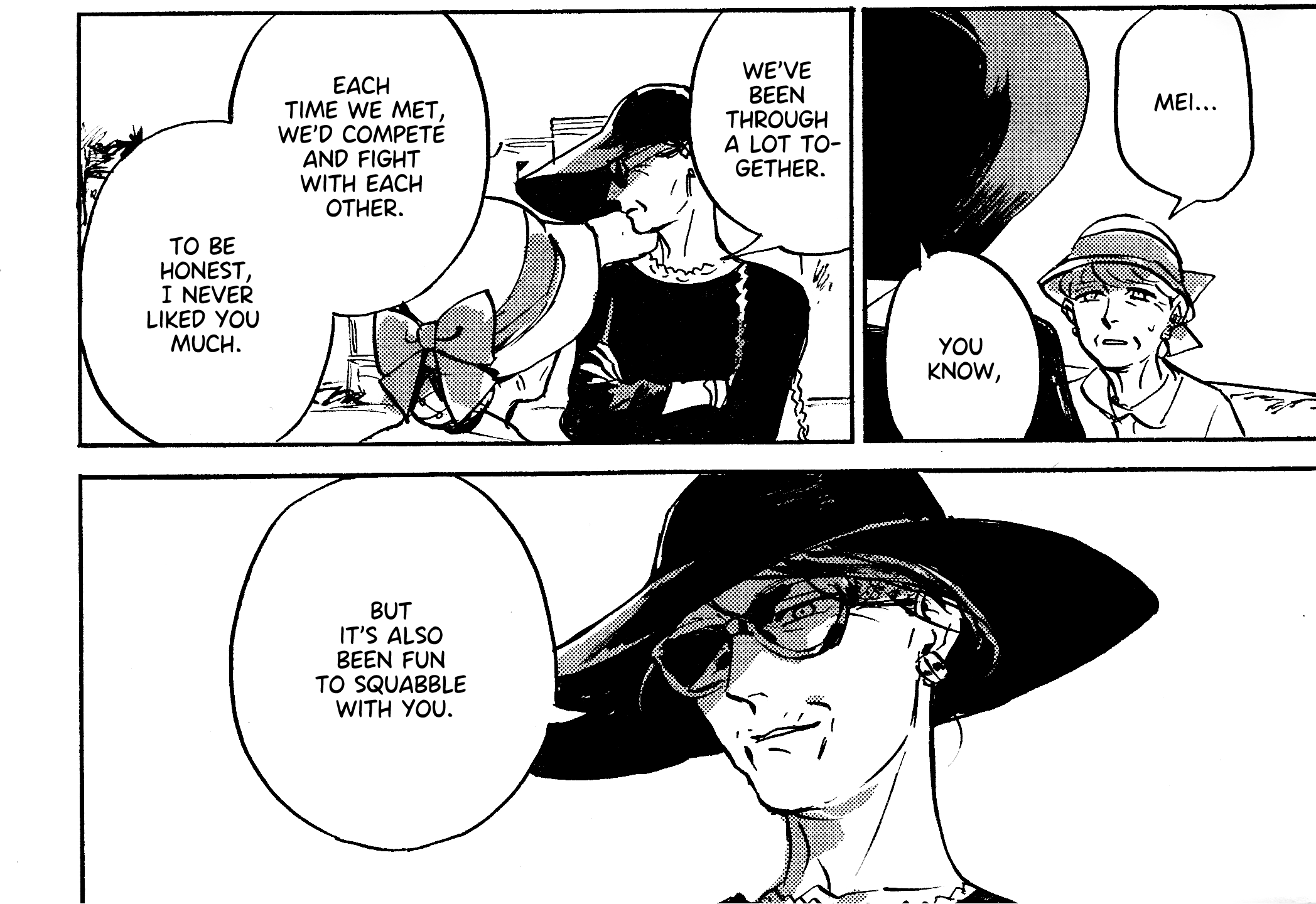
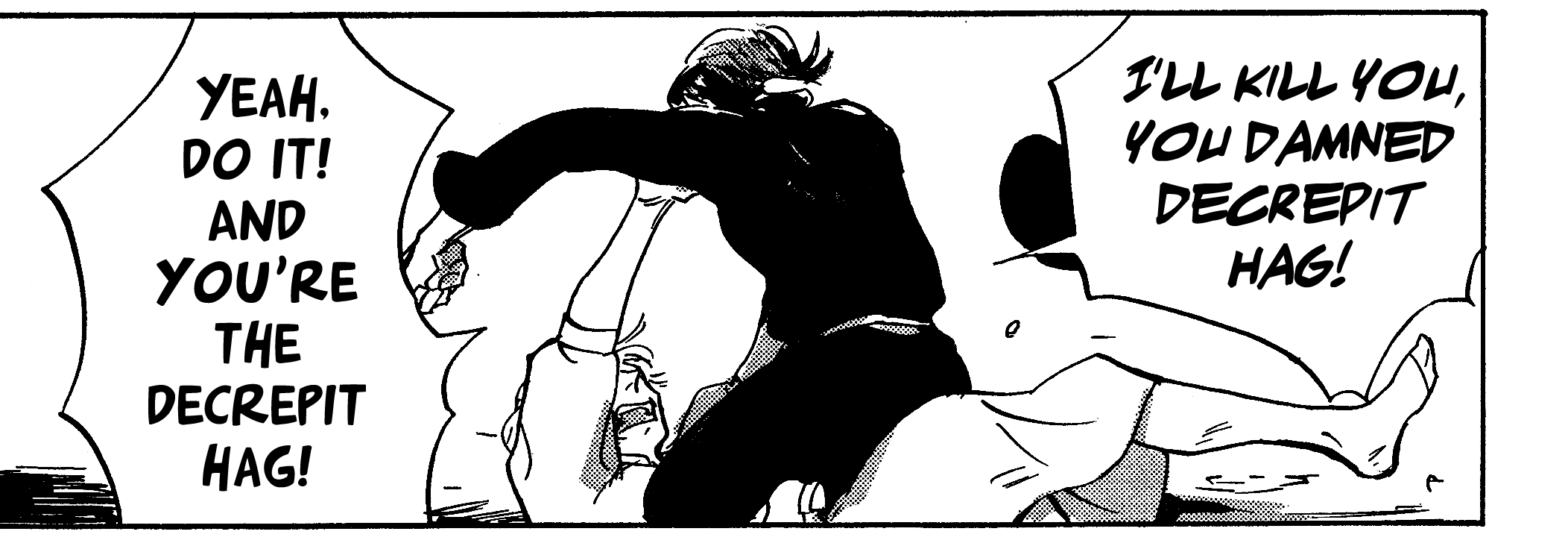
Yuujin no Sougi
Regarding the role of Affection as an oppositional trait, the presence of Affection does not detract from the Idiot Yuri subtype to the degree that Obliviousness detracts from Toxic Yuri. AYAKA is in LOVE with HIROKO! is an Idiot Yuri where Hiroko Kano is willfully Oblivious while Ayaka Toda is trying to be Affectionate (therein lies the comedy—or rather, the Idiocy). There are also series that depict mutually Affectionate characters in Idiot Yuri, such as Baka ni Kokuhaku (translated as Confessions for a Moron) where Hina Hayami rebuffs Ayumu Otsuki's confessions while they both continue to express many instances of Affection towards each other, or Handsome Girl and Sheltered Girl where Mizuki Kanda enters a relationship with Satomi Okuma through a misunderstanding but still reciprocates her Affection. Thus, it cannot be said that Affection is an oppositional trait that defines Idiot Yuri through its absence.
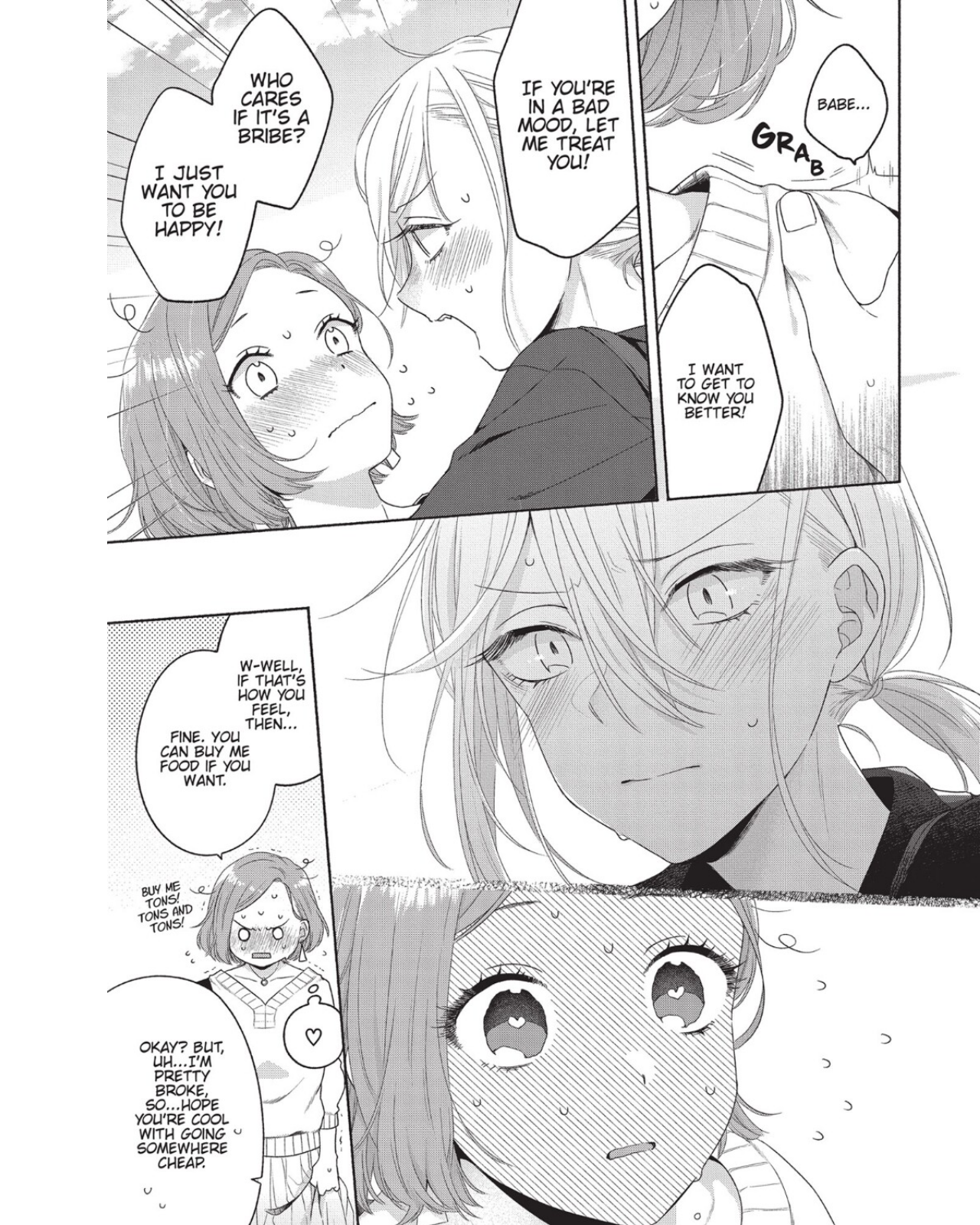
Handsome Girl and Sheltered Girl, Chapter 2
So, what is there to do? Swap sides? Refine definitions? Give up? Certainly not. If you'll allow me some ambition, I believe there is a term that better describes the primary trait of Pure Yuri while operating as a complementary trait to Toxic Yuri and an oppositional trait to Idiot Yuri. In order to strengthen the overall triangle, I propose revising Affection to Romanticism.
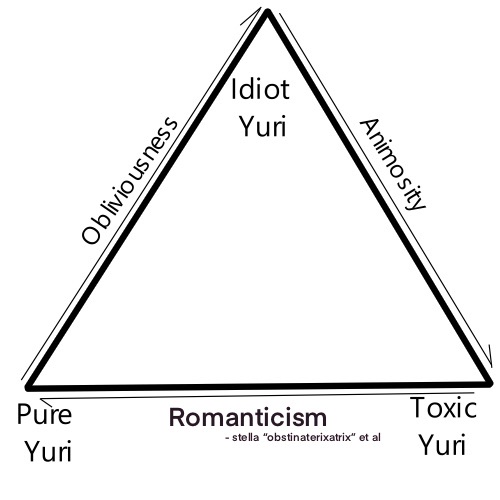
The 'et al.' is @starlike-sight for making the edit
The Proposal
When I say Romanticism, the definition I am pulling from is the literary and artistic sense rather than the amorous sense. ‘Romanticism’ as in idealization, emotionality, and imagination; a relationship that to some extent pushes the bounds of reality. For the purpose of the Yuri Triangle, I propose the operational definition of Romanticism to be 'the emotional intensity from either idealizing or recognizing an ideal individual, relationship, or situation.'
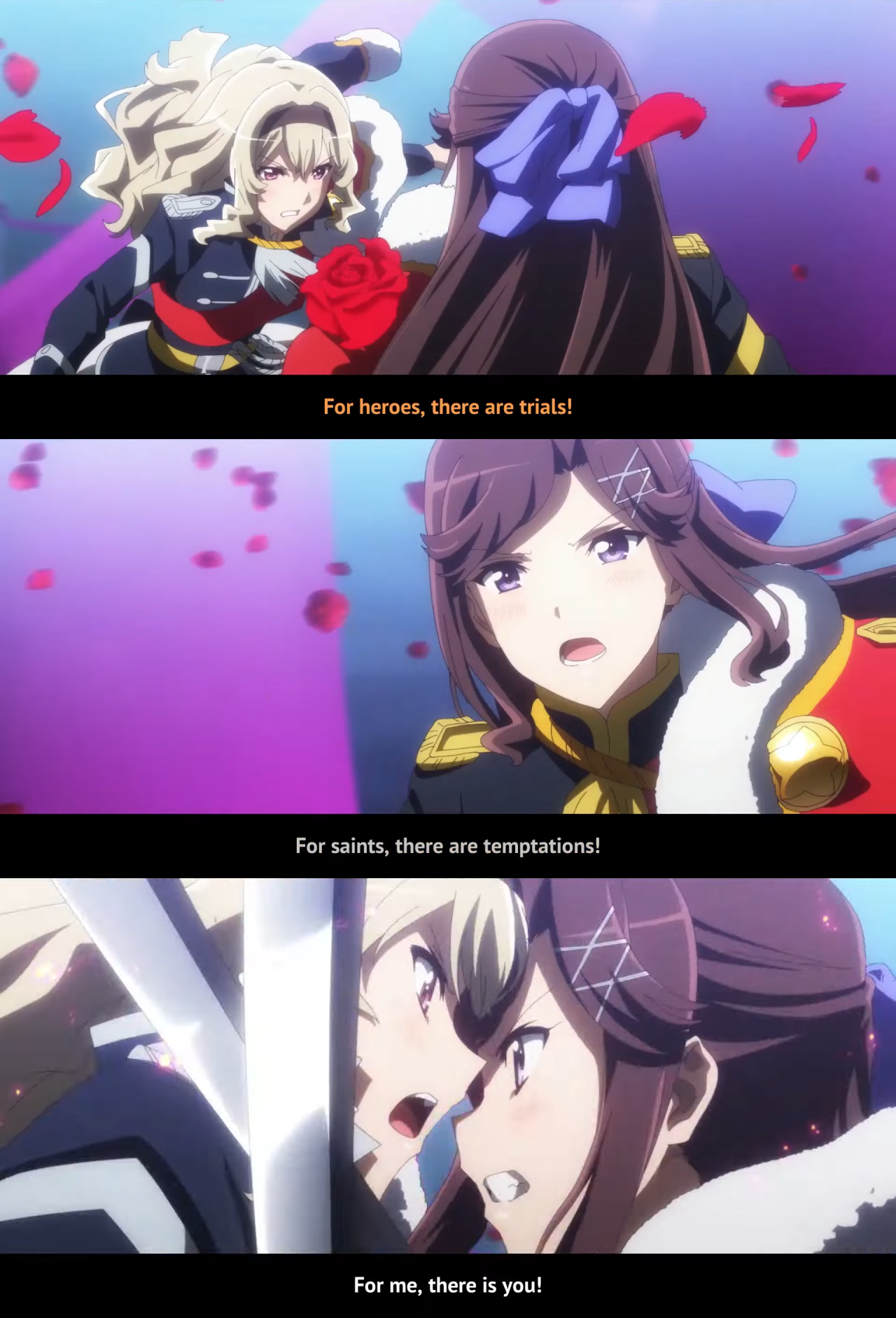
Revue Starlight: The Movie
The Thrill of "S": Romanticism as the Primary Trait for Pure Yuri
In Haike, Arishi Hi ni Saku Hanatachi e (translated as Dear Flowers that Bloom in Days of Yore), first year high schooler Kasumi Sakuragawa finds a letter tucked in the back of the second volume of Hana Monogatari (translated as Flower Tales) by Nobuko Yoshiya, a collection of stories in the Class S genre. The letter comes with a request to initiate an S Relationship similar to the ones depicted in the book, an "intimate relationship between girls, not quite friendship. Or in other words: the deeply affectionate bonds in this book of ours." The anonymous writer describes her longing with a delicate and passionate wistfulness, an elegance befitting of the older sister archetype she desperately wishes to fulfill.
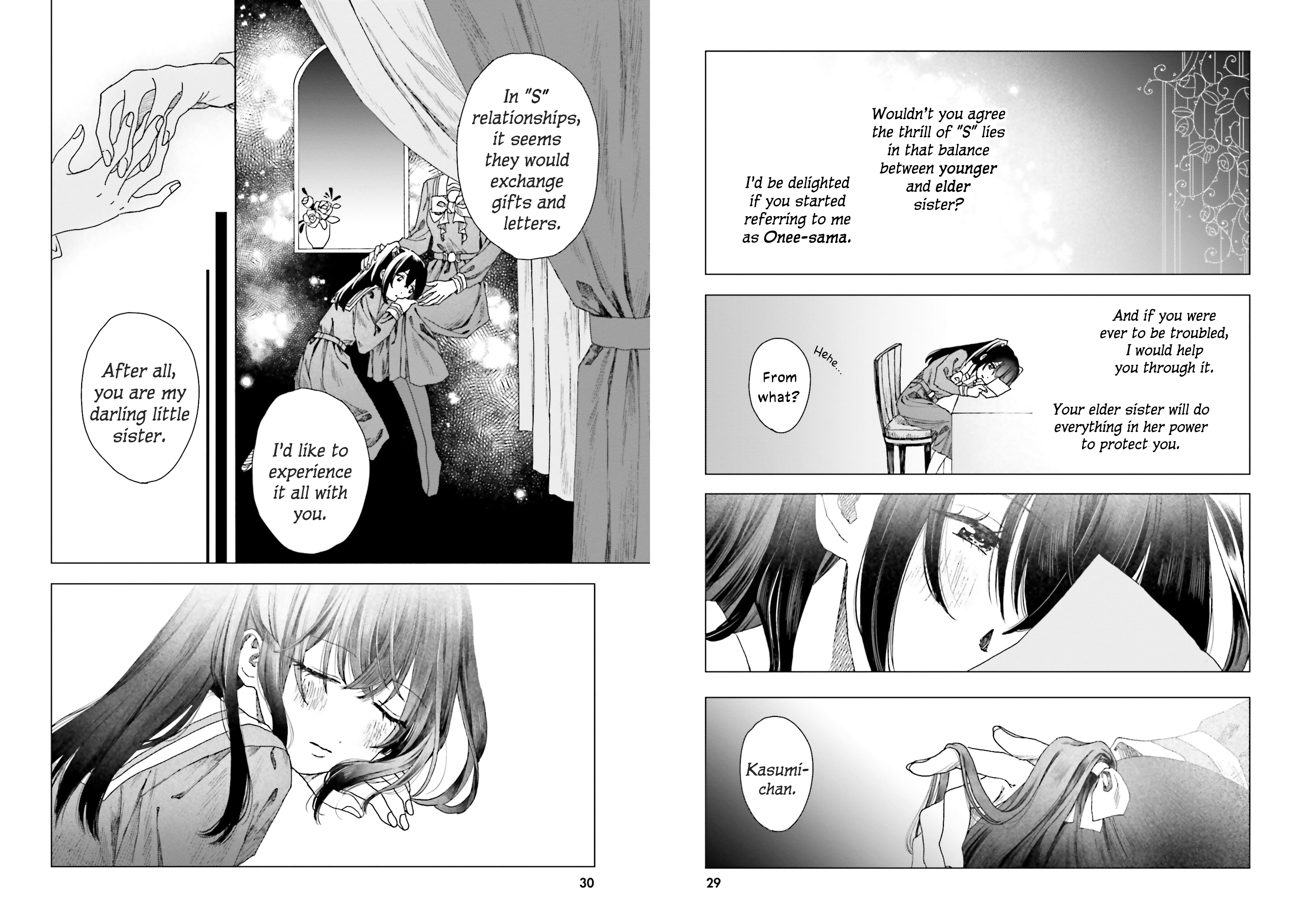
Haikei, Arishi Hi ni Saku Hanatachi e, Chapter 1
Naturally, in order to understand the significance of this, it is important to understand the concept of Class S Relationships.
Class S Relationships were both a normative homosocial aspect of postwar "girl's culture" as well as a literary genre prominent in the early 1900s (Shamoon, 2012). The "S" is said to be taken from "sister", "shōjo", "schöne", and/or "sex" (Robertson, 1992; Frederick, 2005). Personally, I hesitate to speak on S Relationships in-depth as I don't understand Japanese and cannot read any of the primary sources on it. Therefore, I'd like to outsource the description of the narrative conventions to Shamoon (2012):
The pattern of S relationships that emerges in the novels serialized in girls’ magazines usually involves an older girl and a younger girl who are classmates at a girls’ school. The younger girl develops an idealized yearning (akogare) for her older classmate, whom she refers to as oneesama (older sister). Although stories with S relationships between girls of the same age also appeared, the longing (akogare) for an idealized older girl (senpai) who could be addressed as a kind older sister (oneesama) was strong. These relationships had to be exclusive; there could never be a girl with more than one oneesama or an older girl who had two “younger sisters” (Imada 207). In this regard, S relationships clearly follow the pattern of heterosexual courtship and marriage rather than that of more casual female friendships that have emerged in postwar middle and high schools, wherein girls tend to have two or three “best friends” (shin’yū) (White 144). There is also a strong correlation between the idealized concept of spiritual love discussed in the previous chapter and the S relationship. Imada analyzes the letters section of Shōjo gaho and concludes that the readers wrote of their friendships in terms of love, that is, they used the terms “love” (ai) and “affection” (aijō) interchangeably (206). S relationships depend on the emotional rather than the physical connection between girls, a passionate friendship
[…]
Because the S relationship is coded as chaste, the love between girls can attain the ideal of purity, whereas heterosexual relationships are always fraught with scandal, especially for the girl […] As in Futon, the romance between a schoolgirl and a boy usually ended in shame and ostracism for the girl. However, the love between two girls, although destined to end, was safe and allowed girls living otherwise highly controlled lives to exercise some small measure of self-determination.
Shamoon (2012) translates some letters that showcase the lived experience of girls who participated in S Relationships, and the florid, sentimental language that characterizes this subculture, which is very interesting but out of scope. In any case, Shamoon (2012) highlights how S Relationships symbolically mirrored heterosexual relationships, but also provided a shelter from the expectation of inevitable heterosexuality and all the social/emotional baggage that came with it. Whereas conventional heterosexual courtship came, to some extent, with the female participant emphasizing her own debasement or inferiority, S Relationships "encouraged sameness and loving one who looks just like the self, or, rather, a better, idealized self" (Shamoon, 2012).
Within the Class S genre, S Relationships commonly end in separation at best (graduation) and tragedy at worst (death). However, Erica Friedman highlights an example of a Class S novel where the main character continues to reject compulsory heterosexuality and chooses to continue the S Relationship into adulthood: Nobuko Yoshiya's Yaneure no Nishoujo (translated as Two Virgins in the Attic). This is said to mirror Yoshiya's lived experience, as she herself was a woman who rejected societal conventions to live independently with her female partner. In that way, the potential of S Relationships is not limited to a stand-in for heteronormativity or a delay to inevitable heterosexuality; it can also be a challenge to society's demand for heterosexual performance.
There are a lot of answers to why S relationships had the appeal they did, in life and in fiction. The culture of S Relationships could be contextualized as an extension of socio-culturally restrictive norms (reinforcement of gendered segregation while providing a safe space for training inevitable heterosexual courtship), a refuge from restrictive norms (exertion of temporary and limited self-determination), or a subversion of and a challenge to restrictive norms (prioritizing and emphasizing same-gender attraction).
And speaking of appeal, allow me to go on a slight tangent. Another concept to consider with S Relationships is "mono no aware." My favorite translation of this term is "a sensitivity to ephemera", though it's also translated as "the pathos of things" and many other ways I'm sure. A brief summary of this concept is that mono no aware is an aesthetic appreciation that centers transience; a flower in full bloom isn't beautiful despite the tragedy of its inevitable withering, there is a beauty that comes from the awareness of its impermanence (Parkes & Loughnane, 2024). This type of aestheticism is considered fairly significant in Japanese philosophy, and I believe it plays a part in why Class S Relationships carry such a high degree of Romanticism.
In all these different, and sometimes contrasting elements of S Relationships, the anchor is the Romanticism of the relationship; again, not necessary including (and not necessarily excluding) the amorous definition, but in regards to the depth of emotion and the idealization of the courtship. The "thrill of "S"" regardless (or even because) of how it might end.
The Class S genre does not have the prominence it once had, and likely never will again. As Fujimoto & Fraser (2014) describe, "the closed, girls-only time and space that comprised Yoshiya Nobuko’s world does not exist as a communal object any more […] although girls’ schools may exist, these days they are substantially influenced by the outside world. The schools can no longer exist as maidens’ gardens (otome no sono)." However, throughout the description of Class S, perhaps you've started to recognize echos of it in what people consider classic Yuri tropes. The all-girls schools, the upperclasman-underclassman dynamics, the focus on the strength and purity of the relationship—doesn't it sound familiar? These are elements that tend to be seen as stereotypical Yuri. Some of them are present in older works such as Maria Watches Over Us and Sweet Blue Flowers, as well as in newer works such as Haike, Arishi Hi ni Saku Hanatachi e and Odoriba ni Skirt ga Naru (translated as The Skirt Sings at the Landing). As the Class S genre is generally considered foundational to the creation of Yuri (Friedman & Welker, 2022), it makes sense for these conventions to linger—particularly in the Purest subtype of Yuri. And even for works in Pure Yuri that deviate from these conventions, they exist in the context of them. Romanticism remains at their core.
In everything that has been presented, I hope I have made clear why Romanticism encompasses the qualities integral to Pure Yuri. Onto Toxic Yuri!
Your Heart… Shouldn't be so Weak: Romanticism as a Complementary Trait for Toxic Yuri
To establish a point of reference, let's first explore an example of Toxic Yuri with low Romanticism. In My Broken Mariko, Tomoyo Shiino steals the ashes of a friend who died by suicide, Mariko Ikagawa, in order to give her a proper memorial.
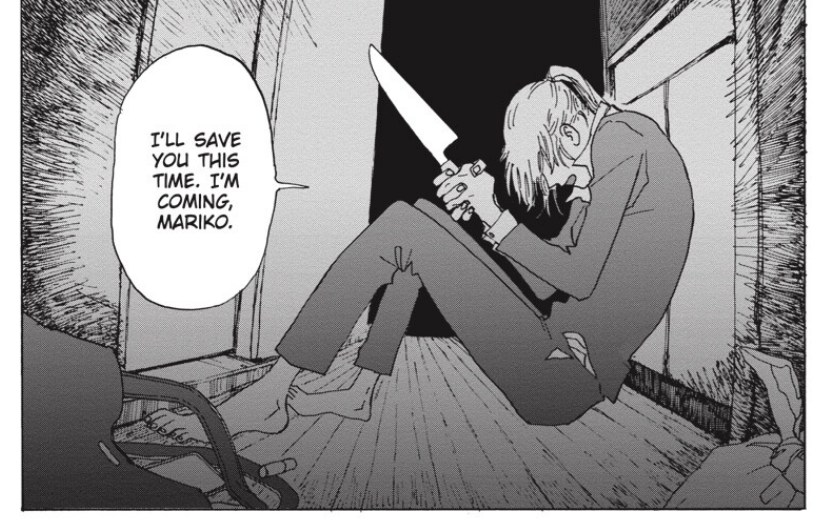
My Broken Mariko, Chapter 1
The relationship Tomoyo had with Mariko includes dysfunctional elements—such as Mariko threatening death by suicide if Tomoyo were to get a boyfriend—but the relationship itself is not any true source of conflict. The true source of conflict would be the specific men directly responsible for abusing Mariko, as well as the society responsible for engendering the continuity and reinforcement of this abuse (e.g., the victim blaming as expressed by Mariko's mother). These conditions are what contextualize Mariko's self-destructive tendencies up to her death, as well as the intensity of emotions that bind Tomoyo to her. There are certainly some moments with Romanticism—in particular, when Tomoyo fixates on the ungraspable beauty of Mariko's ashes—but by nature of the plot and tone, much of the story is Tomoyo forced to contend with the Real rather than the Ideal. Her hurt, resentment, despair, guilt, and the part Mariko plays in these emotions.
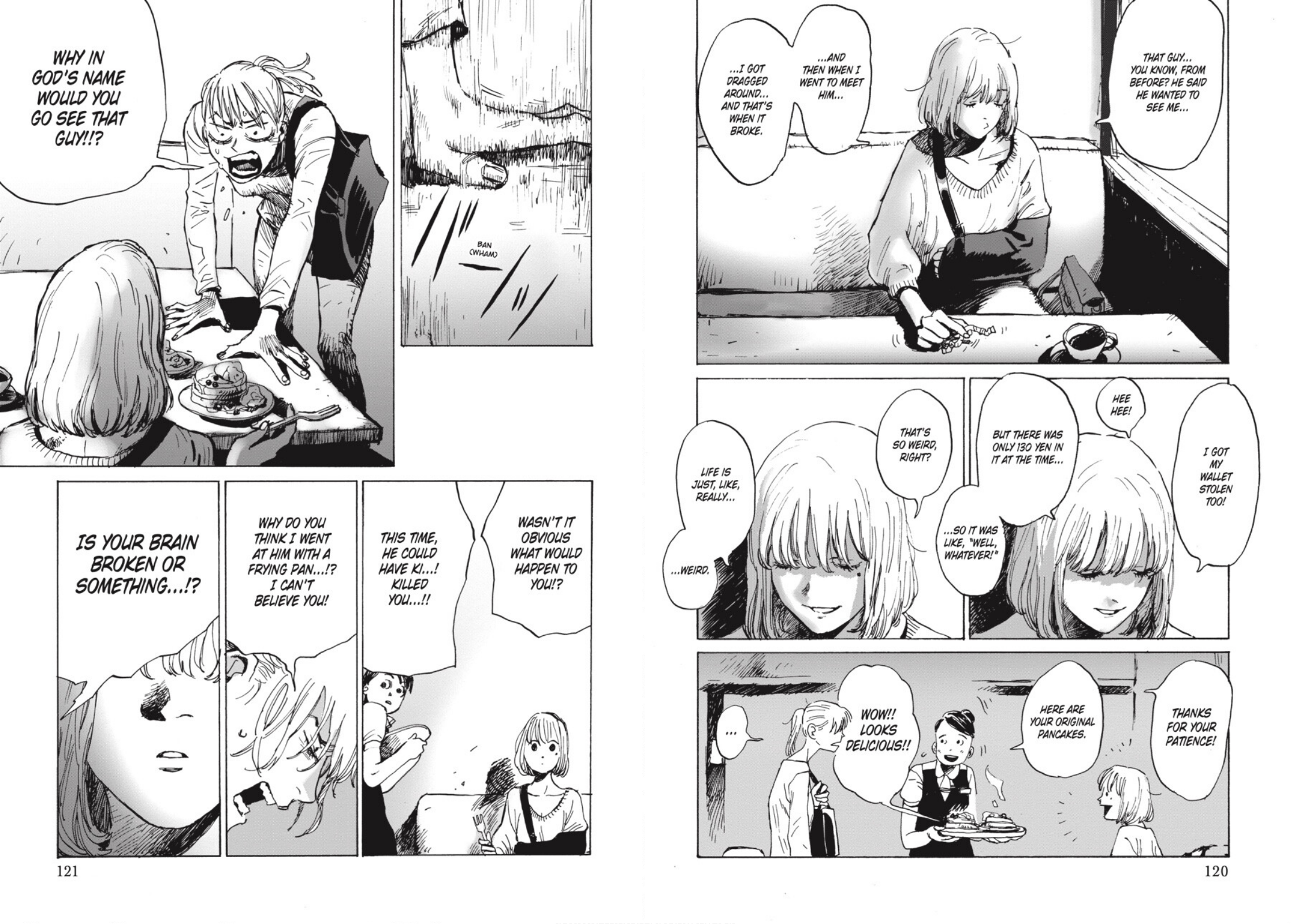
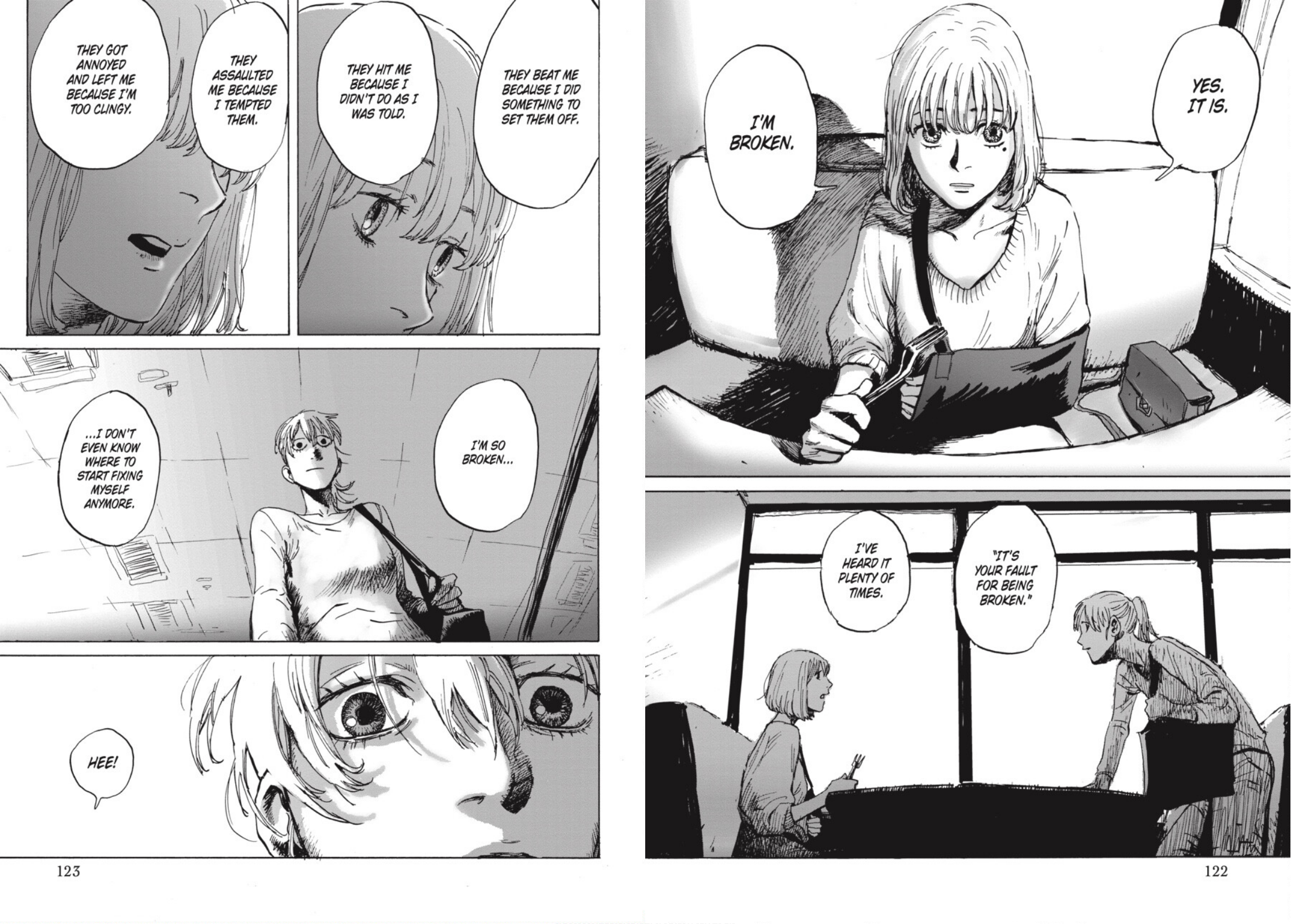
My Broken Mariko, Chapter 4
Romanticism isn't integral to Toxic Yuri the way it is to Pure Yuri. But, just as Animosity serves as a connection between Toxic Yuri and Idiot Yuri, Romanticism serves as a connection between Toxic Yuri and Pure Yuri; just as Idiot Yuri includes the intersection between Obliviousness and Animosity, Toxic Yuri includes the intersection between Animosity and Romanticism.
When Romanticism is present in Toxic Yuri as a complementary trait, there are a couple different flavors that it can add to further define and enhance Animosity (‘romanticizing toxic relationships’, so to speak). As this is a preliminary exploration, I'll start by highlighting two common ways that are immediately obvious.
First of all would be Romanticism as a tool or extension of coercion. This is illustrated wonderfully in Fatale Game. To briefly summarize the series, Fatale Game is about Seri Tainaka, a somewhat popular mangaka in an artistic slump, and Sumire Futami, the editor that starts working with her after her previous editor gets transferred. Sumire comes on strong with effusive praise and flowery words for Seri, going so far as to compare receiving a draft to receiving a love letter from a one-sided crush (but even better). She is also extremely blunt when these drafts don't meet her expectations and won't hesitate to call that better-than-a-love-letter a boring disappointment, placing Seri in a position of insecurity. The relationship only exists for as long as Seri can prove her worth—or rather, her superiority—as an artist compared to all the other artists similarly targeted by Sumire.
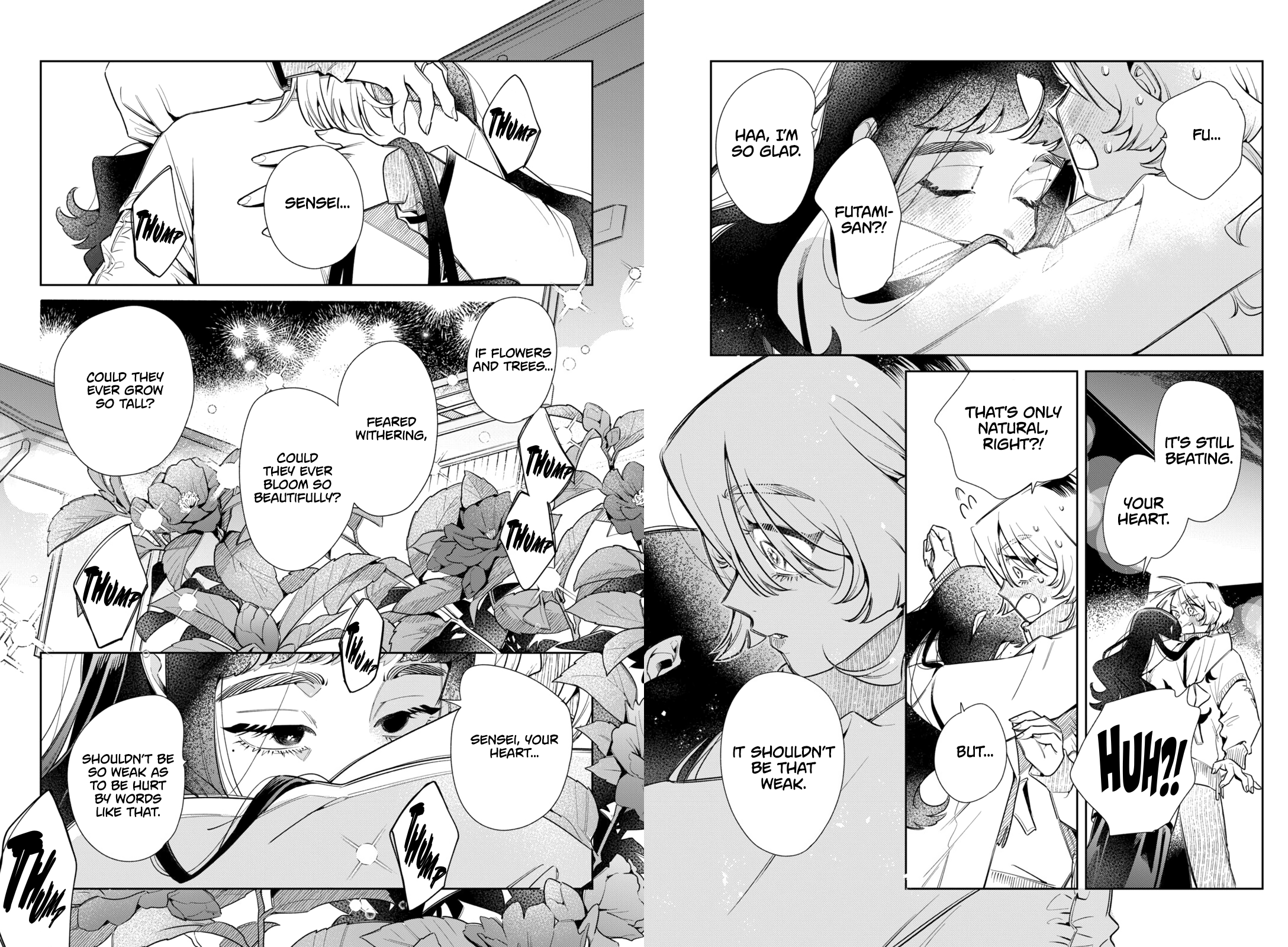
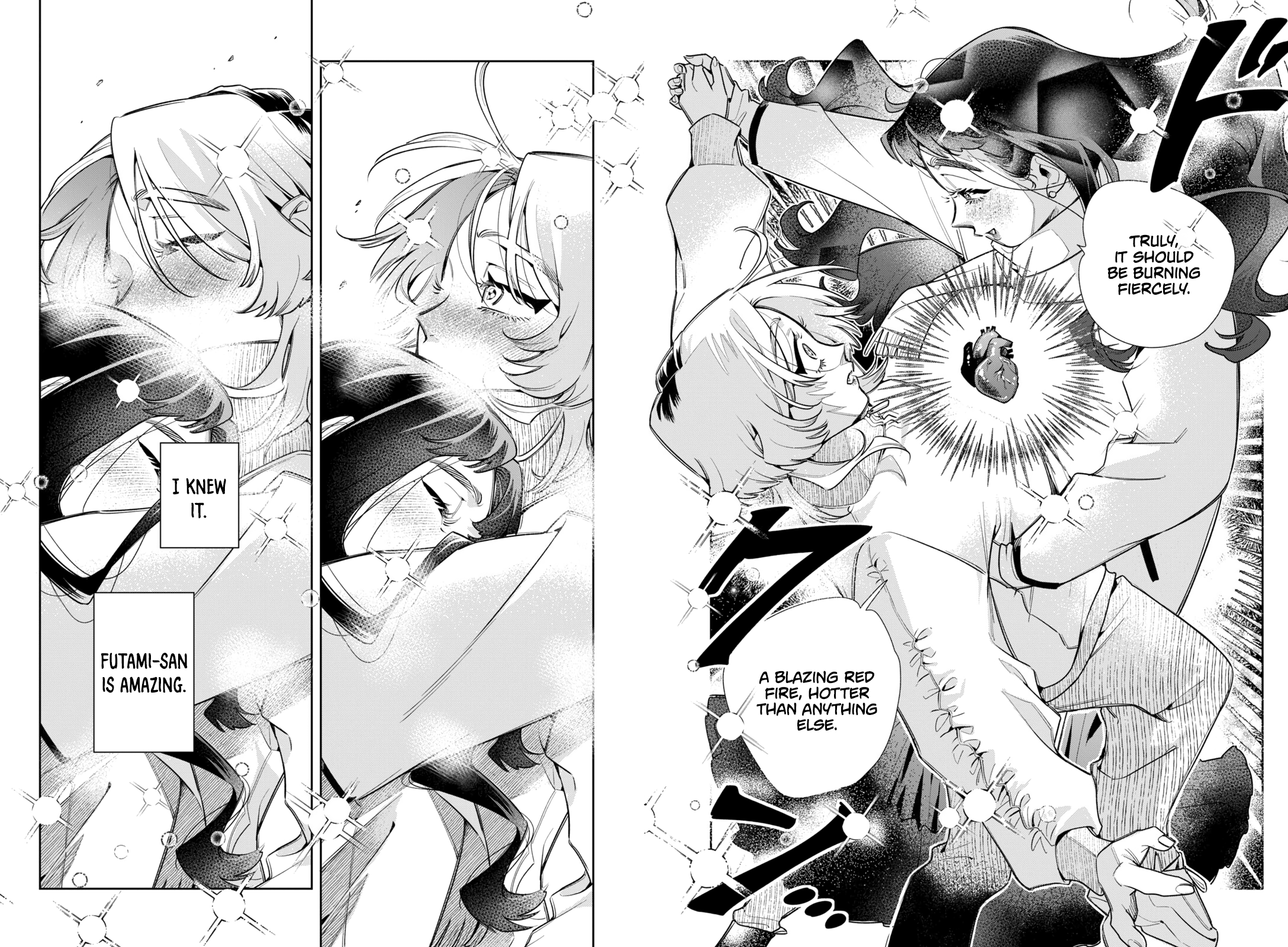
Fatale Game, Chapter 7
It's through this push and pull that Sumire uses Romanticism and Animosity as alternating (and sometimes combined) tools to manipulate Seri towards her own ideal of an artist… or to confirm Seri as a dead end. And it's through this dynamic that Seri's idealization of and desperation for Sumire grows exponentially. Thus, Romanticism is a key trait of their Toxic Yuri.
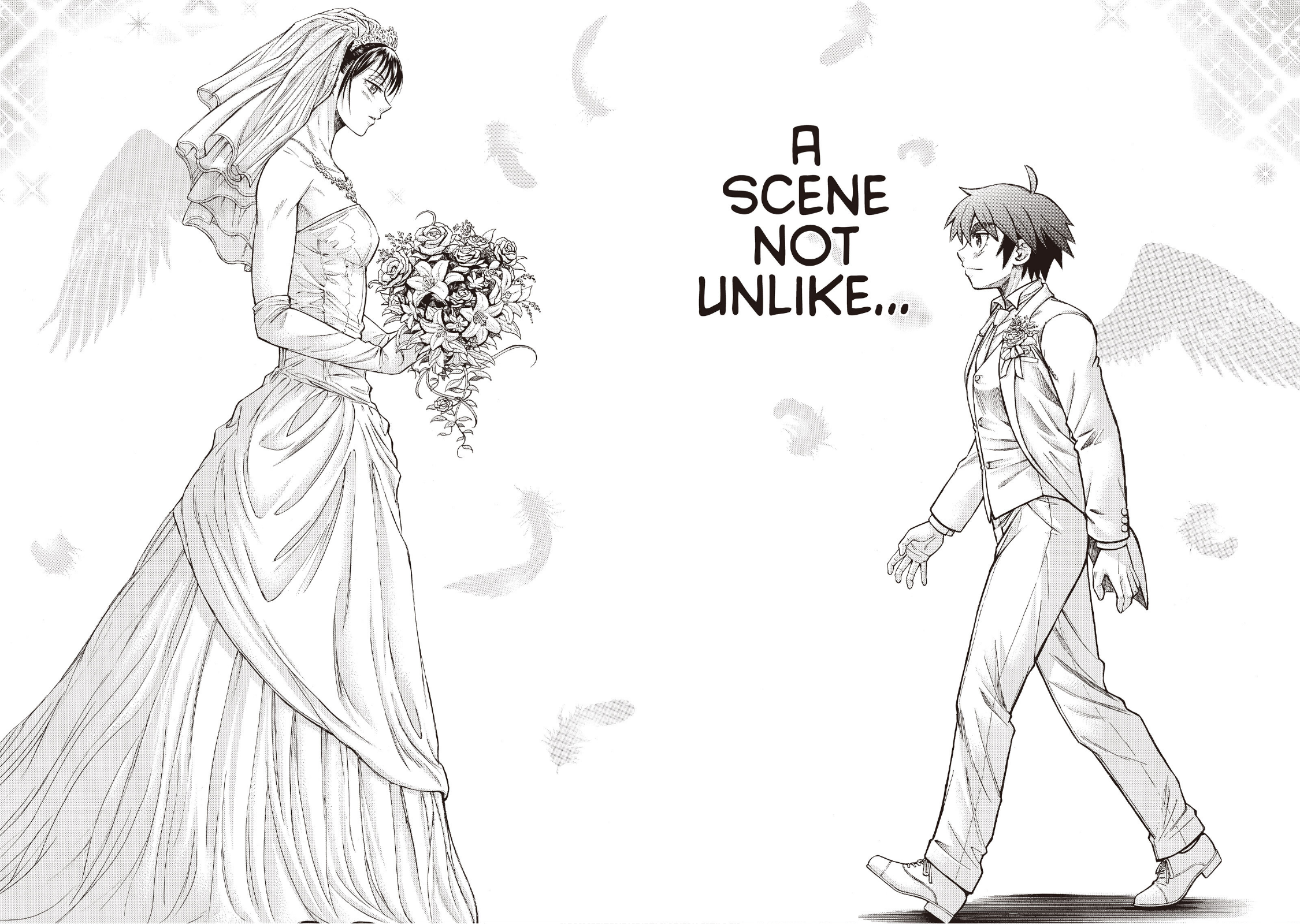
Second of all would be Romanticism as a modifier of Animosity. This comes in two parts, applied to both one-sided and mutual Animosity within the relationship. For an example of one-sided Animosity, let's consider Teppu. Teppu is a seinen sports manga about Mixed Martial Arts where apathetic high schooler Natsuo Ishido is bored with life because she's too good at everything. She's just as disinterested in (if not irritated by) Yuzuko Mawatari up until Yuzuko beats her in a spar. After that, Natsuo is filled with excitement and hatred—her goal is now to crush-or-be-crushed by the happy-go-lucky Yuzuko. At the stage of their inevitable match, which Natsuo spent half a year training for, this is the imagery used to portray the event:
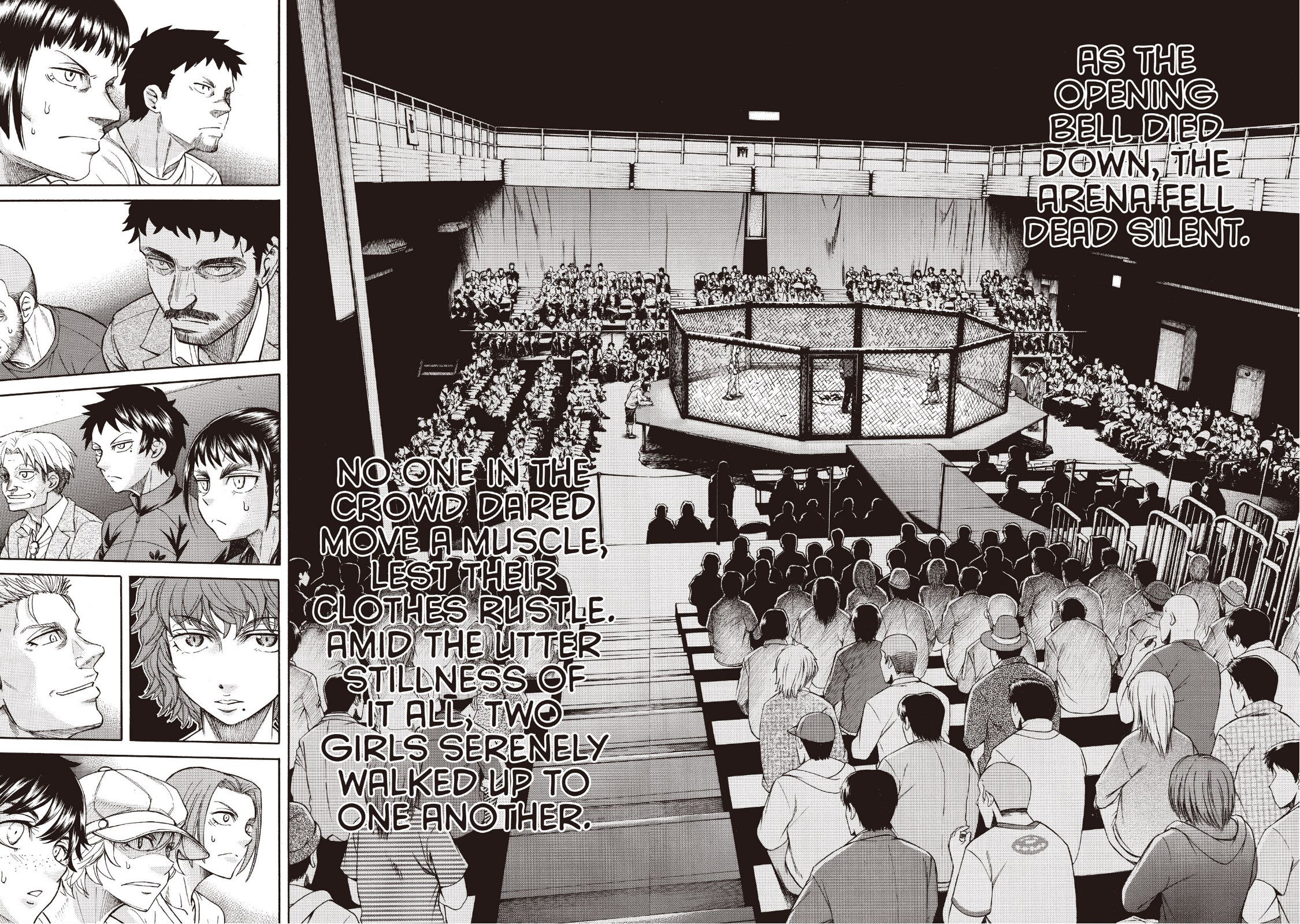
Teppu, Chapter 31
Very romantic. But again, that's not quite the point of Romanticism. Yuzuko awakens something in Natsuo, something that allows her to access the dormant intensity of emotions she's been longing for. Yuzuko isn't simply a rival to defeat—she represents a crossroads between the confirmation or destruction of Natsuo's boring existence as a genius. Either Natsuo beats her and has the catharsis of proving her superiority to someone she actually despises (and having to work for it, for once), or Natsuo loses to her and has to contend with the (new, exciting) reality of another person's superiority. Which one is Natsuo hoping for? The answer is: yes. So, this romantic depiction conveys the Romanticism of Natsuo's anticipation of and commitment to their match. (Yuzuko's also anticipating it but for different, non-Animosity reasons).
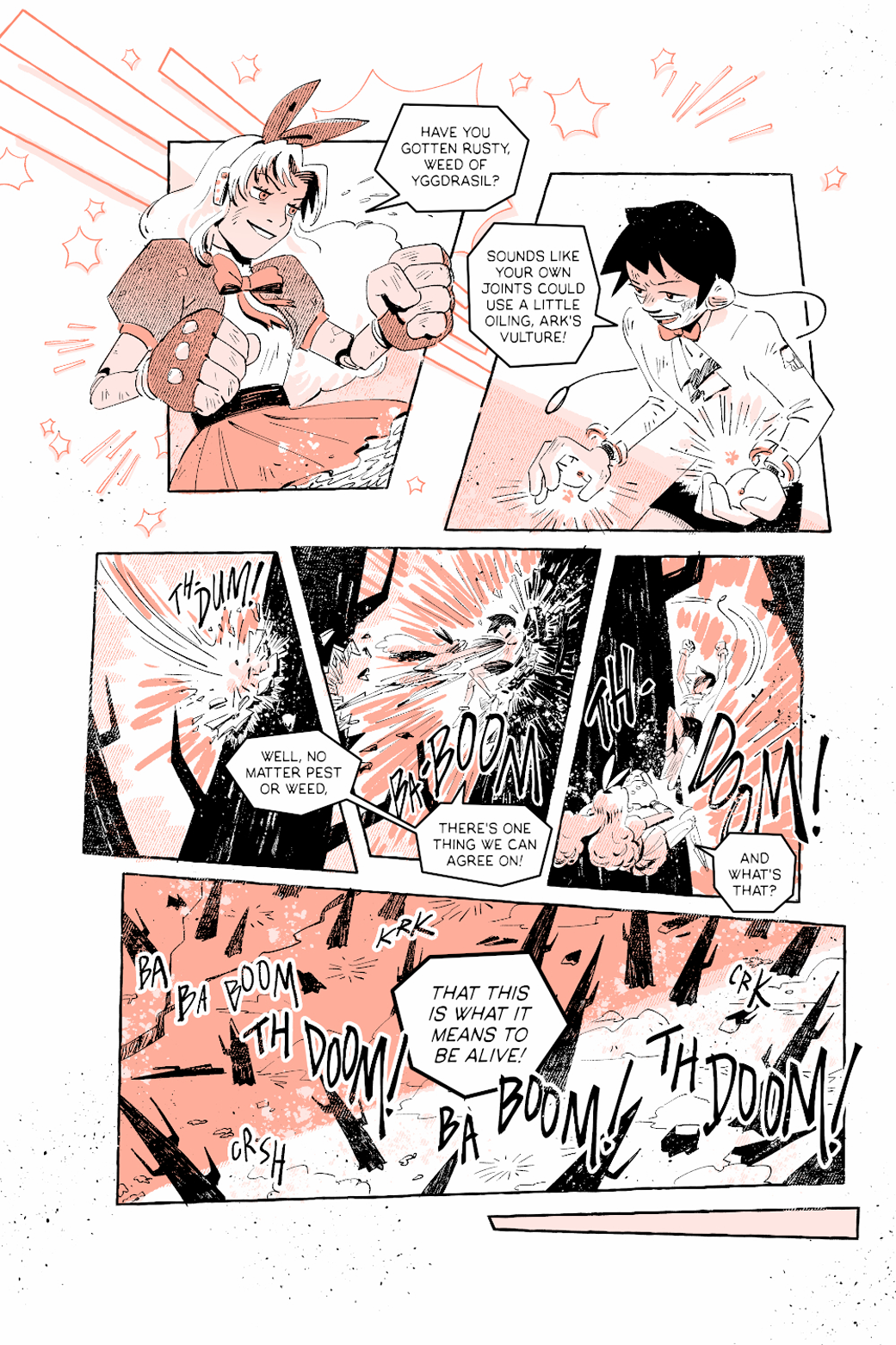
As for Romanticism within mutual Animosity, I would love nothing more than to describe the relationship within Of Thunder and Lightning, an independent comic self-published by Kimberly Wang, then published by Silver Sprocket. In this sci-fi graphic novel, Magni and Dimo are two idol-mascot-supersoldiers charged with representing their respective corporation/society though visible, brutal, and marketable fights.
Of Thunder and Lightning
It is made abundantly clear that both Magni and Dimo see each other as true equals. As the Silver Sprocket version of the summary describes:
Ragnarok looms on the horizon. Yet Magni and Dimo—young icons created for the sole purpose of eliminating the other—find their closest reflection in their opposite. Now, completing their mission means destroying the one who understands them most.
This is unquestionably filled with Animosity and Romanticism—in this case, the recognition of an ideal rather than the illusion of it. No one else could possibly understand their existence to the same degree of intimacy; engineers, managers, media, everyone in their periphery may serve as a witness, but that is the limit of their capabilities. Dimo and Magni truly are each other's closest reflection.
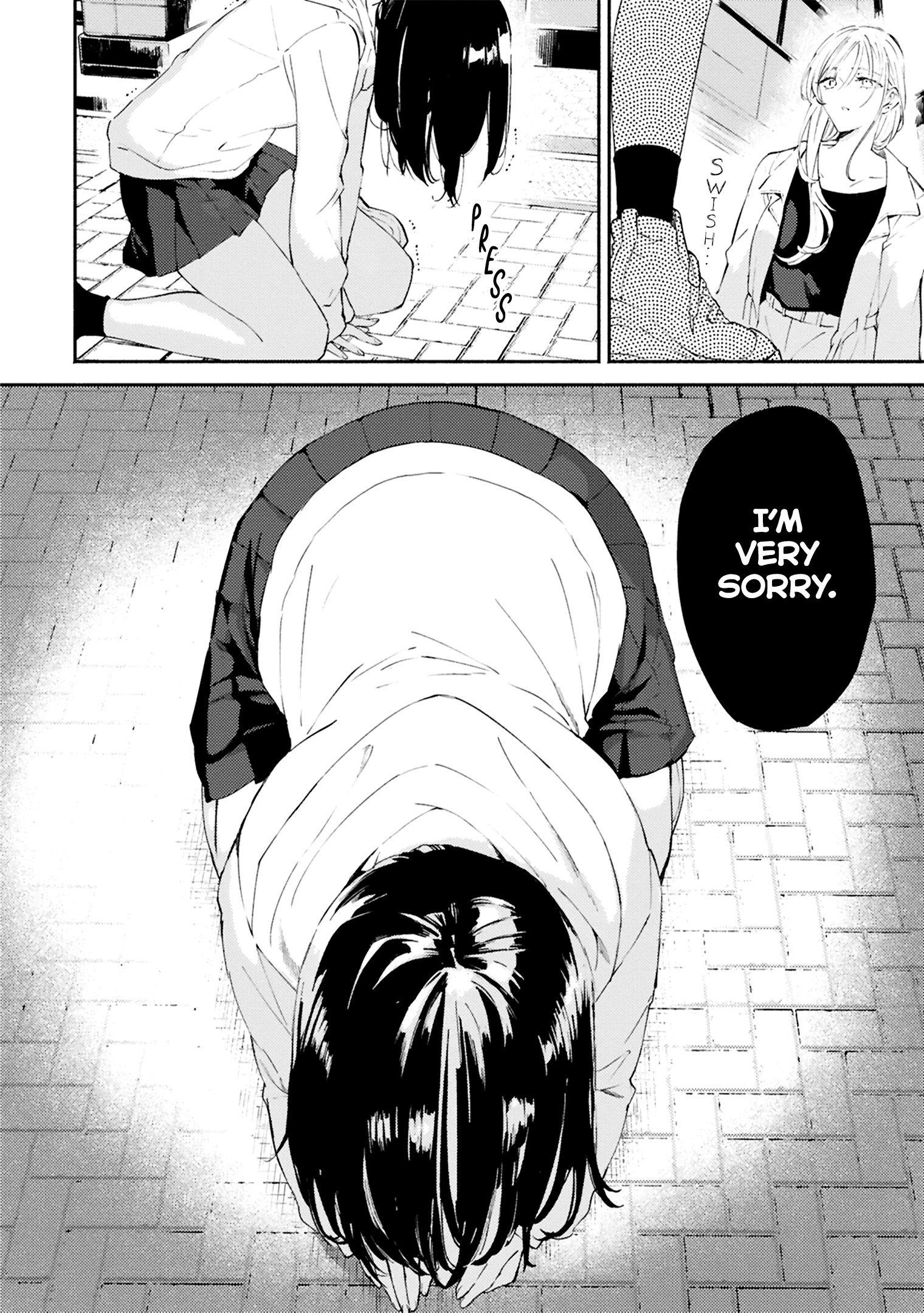
To clarify one more aspect of Romanticism in Toxic Yuri, I would argue that Romanticism does not exist solely in an emotional capacity, it can also encompass sensuality and eroticism. This can be seen in Utsushicha Dame na Kao (translated to A Face You Shouldn't Show), wherein Misa, a woman who works as a hostess, enters a under-negotiated S&M relationship with an actress named Io. Consent in this relationship ranges widely from explicit to implicit to nonexistent. When conflict arises, it generally is sensuality that triumphs above all, as is epitomized in the scene where a serious fight shifts into an extension of their play.
Utsushicha Dame na Kao, Chapter 10
The eroticized Romanticism goes both ways; Io is drawn to being dominated in a way that defies the control exerted over all other aspects of her life, and Misa is drawn to the absence of resistance towards all the boundaries she crosses. This is not a relationship where ignorance has any place—each woman might grapple with the choices they make, but these choices are made with full awareness of their consequences.
And on that note, let's go to Idiot Yuri.
My Apologetic Feelings: Romanticism as an Oppositional trait for Idiot Yuri
The conditions of Idiot Yuri serve as a barrier for retaining Romanticism. If Romanticism is present, it won't be for long! Ignorance lacks a certain capacity for poetry, after all.
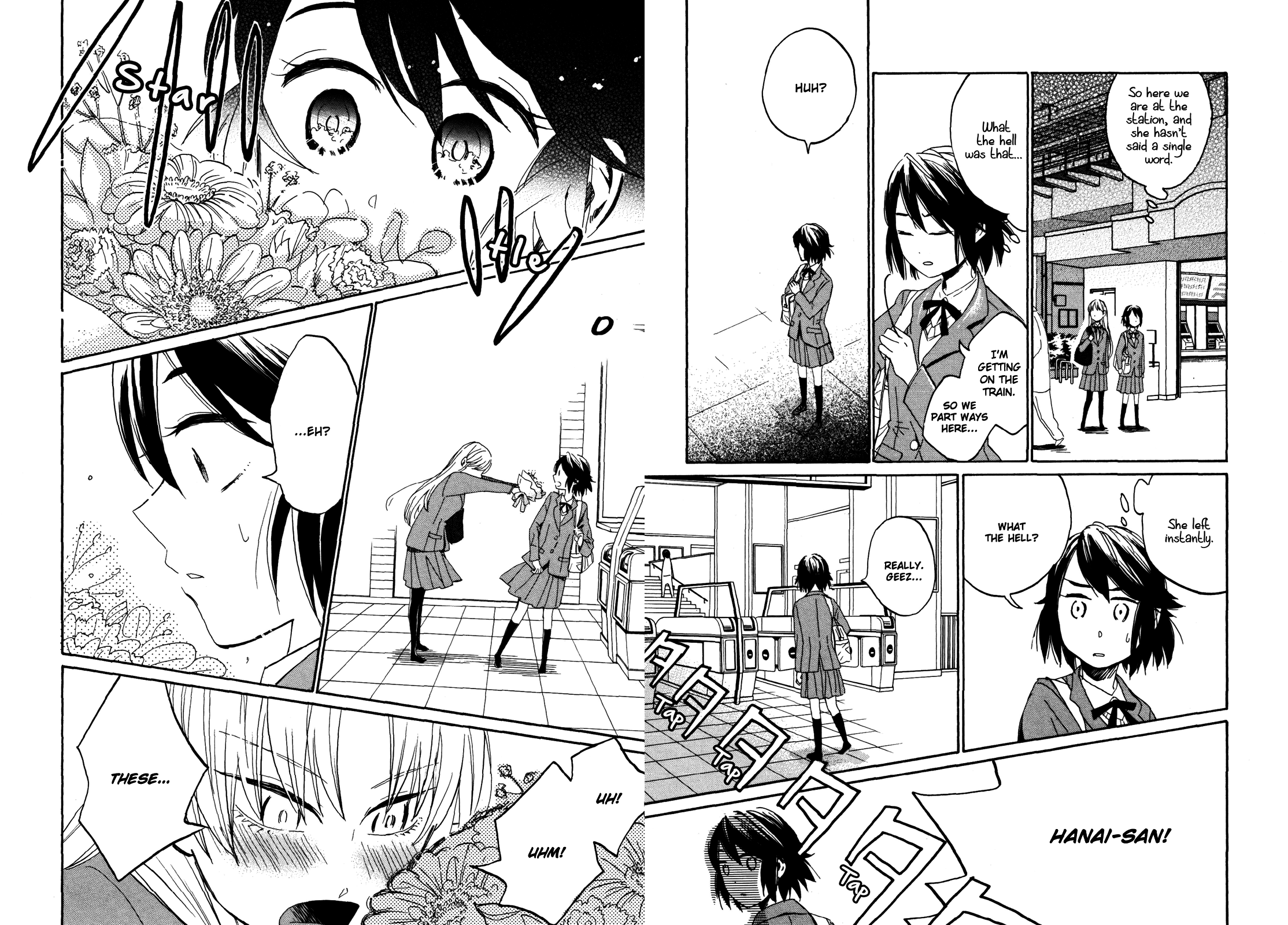
One clear example comes from the briefly referenced Hana to Hoshi. To provide a more detailed summary, Sawako is a high schooler who used to play table tennis competitively until she found herself up against Shiori, a rival she couldn't defeat, and she ends up quitting the sport altogether. She approaches high school as a fresh start, eager to leave behind the bitter feelings of the past—except the past she's trying to escape ends up being her classmate. In the first volume, Sawako finds herself in the confusing position of resenting Shiori, growing closer to Shiori, being jealous of Shiori's relationship with a surprise childhood friend, then being told by said childhood friend that Shiori has a crush on her. Shiori has no context for any of this, only knowing that Sawako seems to be upset. In an attempt to repair the relationship, Shiori presents Sawako with a bouquet of flowers.
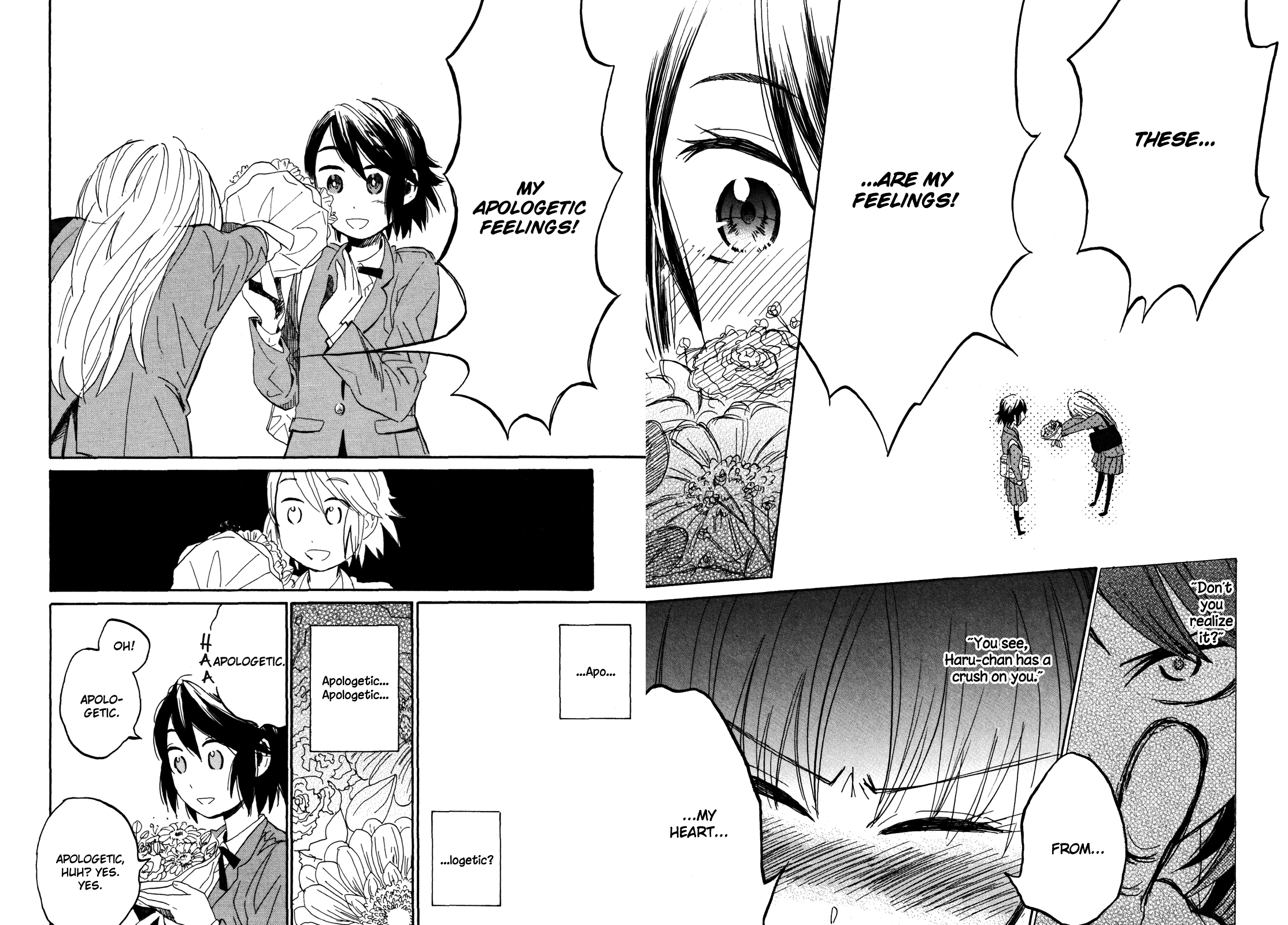
Hana to Hoshi, Chapter 4
The tone of the scene carries a potential for Romanticism up until Shiori's Obliviousness takes the forefront, completely undercutting the Romance of receiving flowers from someone who might have a crush on you. In this way, Romanticism is essentially rendered absent and the Idiot Yuri subtype is firmly retained. Though the two characters will undoubtedly get together, the road to reciprocal romance is littered with pratfalls.
This type of narrative rhythm is very common in Idiot Yuri. Similarly, in AYAKA is in LOVE with HIROKO!, the potential for Romanticism is introduced…
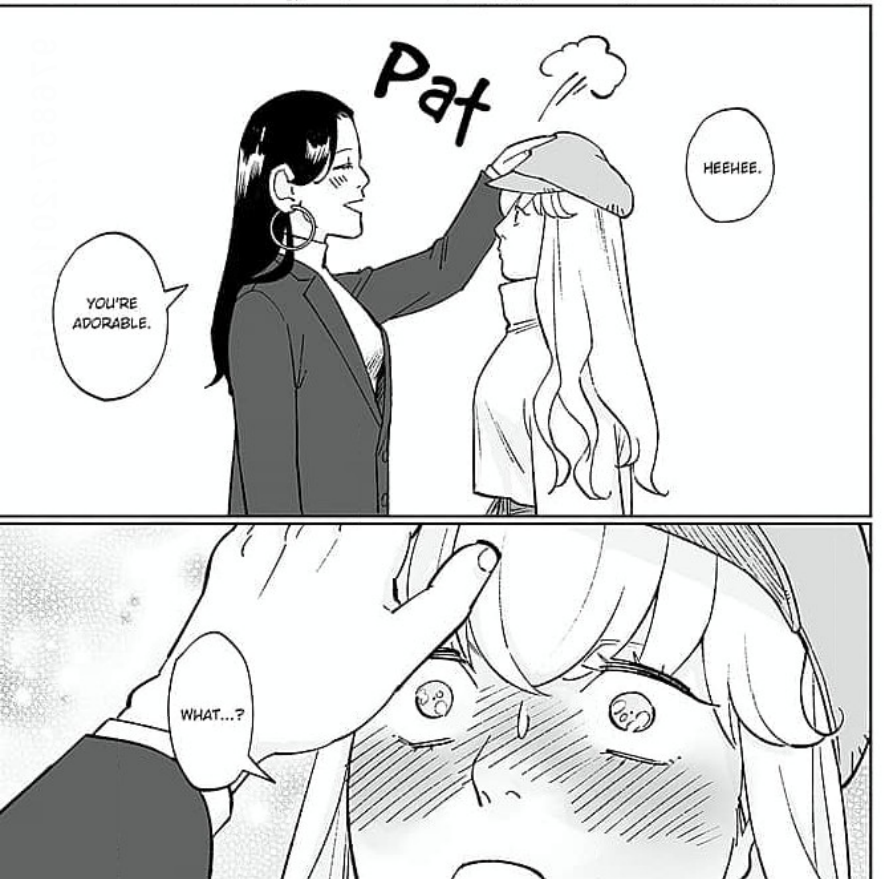
AYAKA is in LOVE with HIROKO!, Chapter 7
And then voided by Obliviousness.
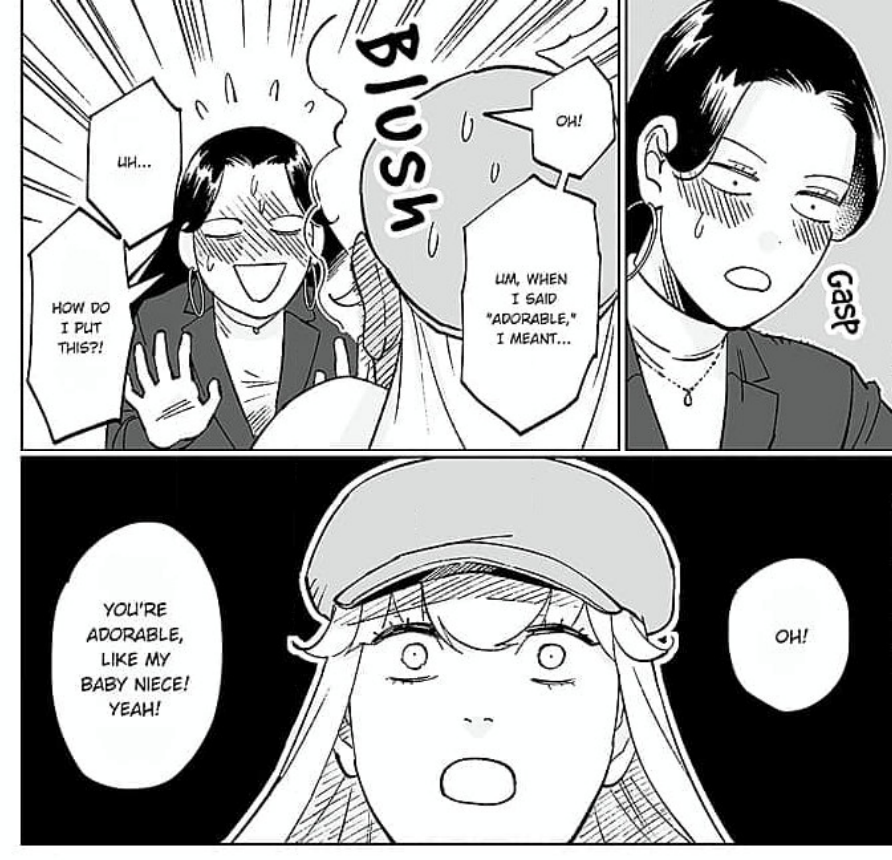
AYAKA is in LOVE with HIROKO!, Chapter 7
Thus, the Idiot Yuri subtype is maintained through the absence of Romanticism.
Just as the Idiot Yuri subtype is maintained through the absence of Romanticism, the presence of Romanticism leads to the absence of Idiot Yuri. In Koi yori Aoku—also mentioned quite a while ago—Romanticism overpowers Obliviousness. Tsukasa and Shiori spend at least four full volumes (and counting) with neither of them understanding the growing romance between them. Forget gauging each other's feelings, they've got their hands full with their own.
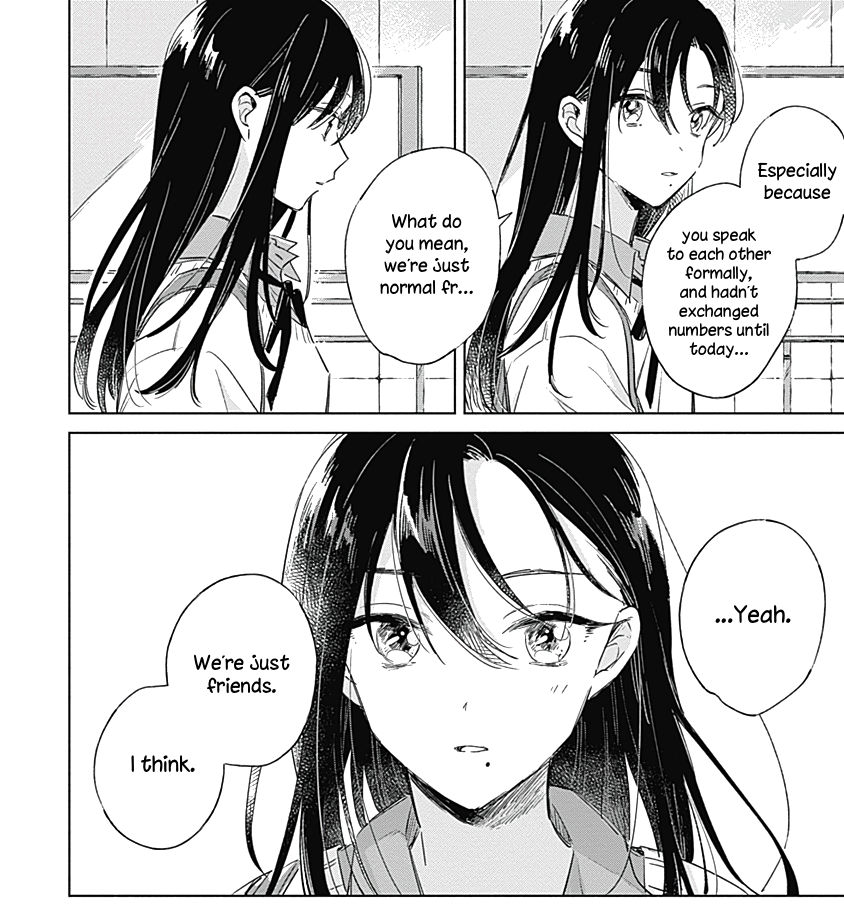
Koi yori Aoku, Chapter 3
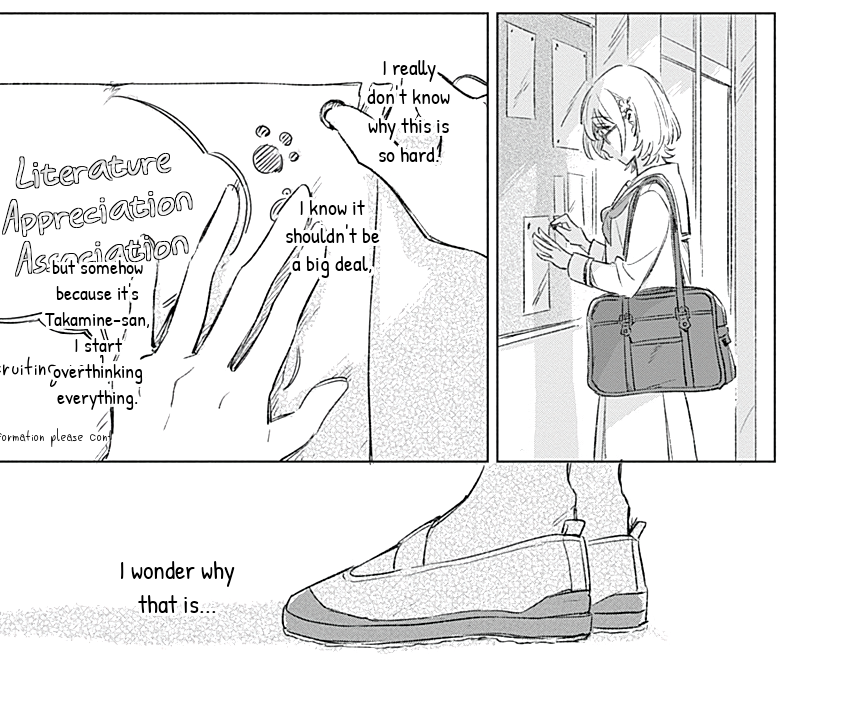
Koi yori Aoku, Chapter 4
Yet even with this degree of Obliviousness, it cannot be considered Idiot Yuri due to the Romanticism present—the focus of the series remains on exploring their mutual interest and attachment, even if they remain Oblivious to the exact nature of these emotions. Take the scene where Shiori watches Tsukasa act in a play for the school's culture festival; though there is lack of clarity, there is recognition.
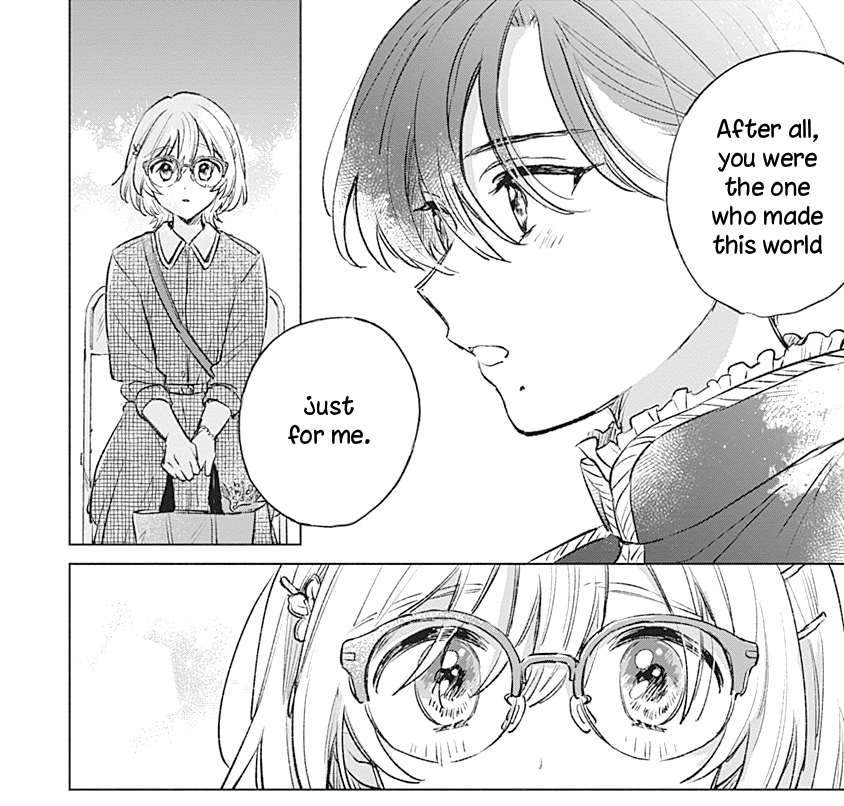
Koi yori Aoku, Chapter 23
In this way, Romanticism serves as an oppositional trait for Idiot Yuri; the absence (or denial) of Romanticism strengthens the categorization of a work as Idiot Yuri, and the presence of Romanticism weakens the categorization of a work as Idiot Yuri.
The Briefest Changelog I can Possibly Give
As this has been a long and winding series of thoughts, hopefully providing the main points of proposed changes will aid in your orientation:
Overall: incorporate the concept of primary, complementary, and oppositional traits, as well as complementary and oppositional subtypes
Pure Yuri: shift 'knowing' to 'acknowledgement' to focus on reciprocation
Affection: change to Romanticism
Toxic Yuri: no change
Animosity: no change
Idiot Yuri: focus on lack of clarity as an inadvertent source of misunderstanding/conflict
Obliviousness: shift from 'desire' to generalize more towards 'powerful ignorance'
Practical Application
When considering what Yuri is, I would like to highlight an element described by Maser (2013); Yuri is not only within an established and defined genre, there can be an element of interpretation through fan engagement. Or, as Erica Friedman puts it: "Of course, anything I like is yuri" (Friedman & Welker, 2022). Naturally, any application of the Yuri Triangle will be subjective and will occur on some imprecise spectrum of measurement rather than any specific taxonomy or rating scale. What I consider Toxic Yuri with a low degree of Romanticism may be experienced by another reader as having a high degree of Romanticism, or vice versa. What I consider within the bounds of Yuri might be to others outside the bounds of Yuri, or vice versa. That said, here are some of my basic (as in, only requires a single paragraph of justification) Yuri opinions:
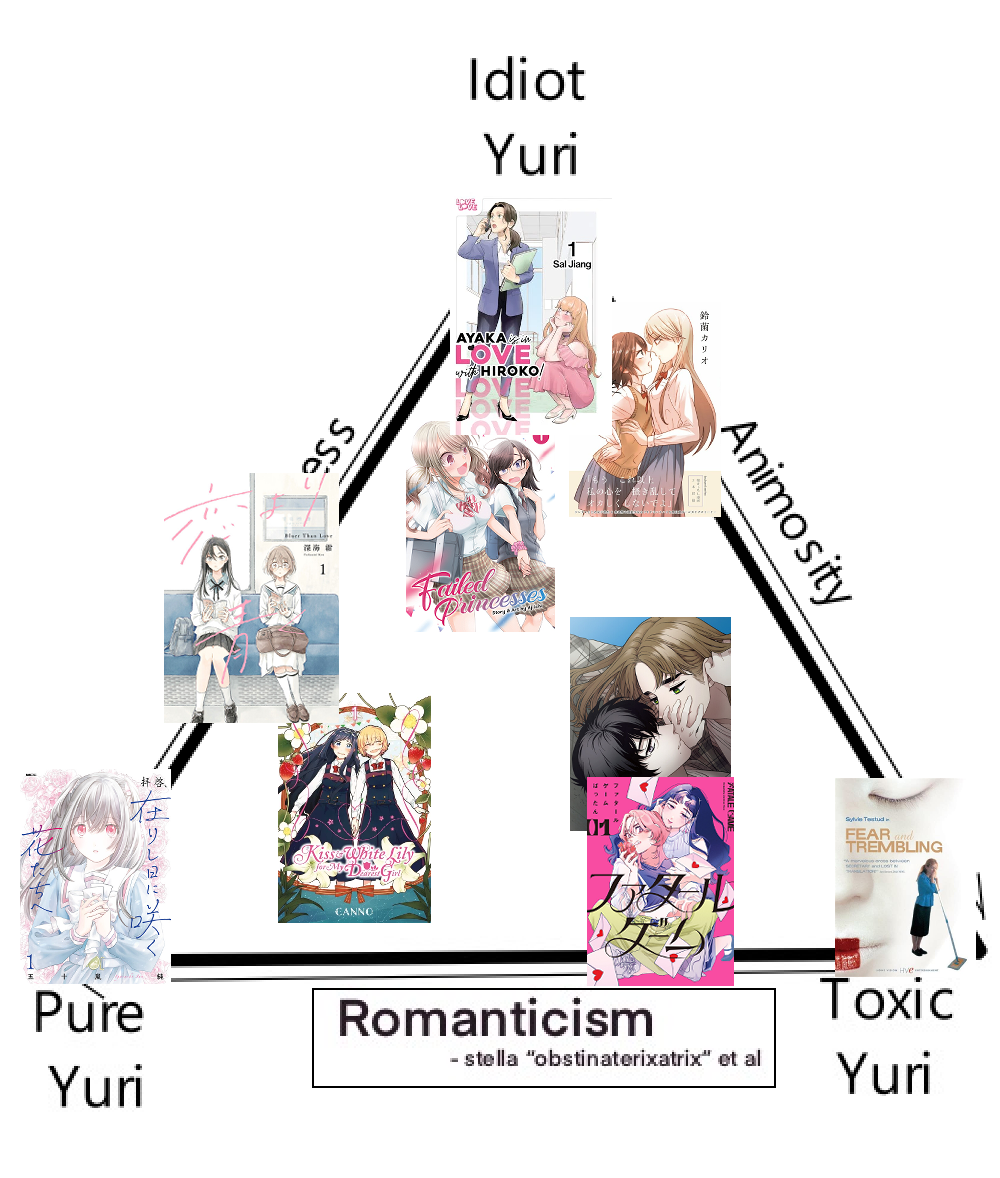
Pure Yuri with Romanticism: Haikei, Arishi Hi ni Saku Hanatachi e
The platonic ideal of Pure Yuri, particularly with its homage to S Relationships. The atmosphere is heavily Romantic and the relationship is centered with appropriate intensity. The concentration of Yuri is potent enough to stand at the top of Pure Yuri! (Though, there is a powerfully Toxic Yuri side couple… until they swing all the way back to Pure Yuri. A double Yuri reacharound).
Pure Yuri with Obliviousness: Koi yori Aoku
The intensity of Romanticism within the relationship is light, but the strength and impact of the relationship is significant—particularly in how it enhances Tsukasa and Shiroi's abilities to engage with themselves and the world around them.
Pure Yuri with Animosity: Kiss and White Lily for my Dearest Girl
Finding a work to fit a subtype with its oppositional trait is always going to be hard, and I do believe I'm prone to changing my mind. But there's a couple in this anthology with one-sided Animosity that exists alongside Romanticism…ish.
Idiot Yuri with Obliviousness: AYAKA is in LOVE with HIROKO!
It takes a volume and a half for Hiroko to acknowledge Ayaka's genuine confessions of romantic attraction, which Ayaka attempts nearly every chapter. If this isn't the epitome of Idiot Yuri, then I'm the idiot.
Idiot Yuri with Animosity: Hana to Hoshi
I've justified this already. This series is one of my favorites and is a significant template for my ship preferences. The Animosity isn't only from Sawako towards Shiroi, Sawako also directs much of it to herself, and therein lies some juicy character/relationship drama! It's fun seeing all the characters fall flat on their faces, sometimes literally.
Idiot Yuri with Romanticism: Failed Princesses
I waffled on whether Animosity was potent enough to undercut Romanticism, but I've settled on Romanticism being more of a key feature. There are some distorted emotions between them, and there are some outside obstacles to the relationship, but it's more about intensity rather than Animosity, and the intensity stems from Romanticism (and sometimes Obliviousness). It's Yuri with a Shounen vibe.
Toxic Yuri with Animosity: Fear and Trembling
My favorite Belgian-Japanese Toxic Office Yuri. Amélie's Romanticism and Obliviousness is no match for the overwhelming power of Ms. Mori's Animosity. They're just like David Bowie and Ryuichi Sakamoto in Merry Christmas Mr. Lawrence <3
Toxic Yuri with Romanticism: Fatale Game
Surely I've said enough about it in the essay itself. Unquestionably Toxic, unquestionably Romantic. I'd love to put these characters in a jar and shake them around.
Toxic Yuri with Obliviousness: Love Thy Neighbor
A bit of a reach. To some extent, willful Obliviousness serves to maintain an illusion that lets them continue the relationship (until the illusion is broken), and it comes and goes in the Animosity surrounding them, as well as the Animosity that develops between them.
Now, a final note for this section. Can the Yuri Triangle be applied to genres and dynamics outside of Yuri?
My answer is: no.
The Yuri Triangle is exactly as the title describes: a Triangle that describes Yuri. BL, Shoujo, and Josei with romance (alongside works outside Japanese genre classifications) can have elements that overlap with Yuri—there are oblivious relationships, there are dysfunctional relationships, there are heavily romanticized relationships across all genres and genders. However, works outside Yuri lack the context of the maidens' garden described by Yukari & Fraser (2014)—an equalizer that serves as a refuge from society's misogyny and expectations, particularly from gendered power dynamics. M/F romances could be considered both a genre that heavily expresses gendered power dynamics and that provides power fantasies within/in opposition to it, while M/M romances are more about the removal of gender as a consideration within power dynamics (though often continuing to mimic the structure of gendered power dynamics—it's complicated, you know how it is).
One caveat, at present I don't believe I can make any generalizations about romances with characters outside the gender binary because there are so few of them in comparison. They naturally will have a different relationship with gendered power dynamics—some may have a place in Yuri, some may not.
Future Directions
A significant limitation is: I cannot read Japanese. I can only experience Yuri through the severely myopic lens of what has been written in English or officially licensed (or unofficially translated). I do believe a point of refinement could come from being able to read more works within the Class S genre. After all, considering the separation and tragedy that occurs in a not-insignificant amount of Class S works, could some degree of Animosity be present? Or are there specific characteristics that further distinguishes tragedy from Animosity?
While I don't believe the Yuri Triangle can be used to define relationships outside of Yuri, I believe that the Yuri Triangle could possibly be used to explore, analyze, or modify the Yuriful nature of certain narratives and dynamics. This may be where Boy Yuri and Girl Yaoi warrants further exploration. My internal compass for Yuri points to the genre's relationship with Distance (emphasizing, pursuing, overcoming, etc.), and for Yaoi it points to the genre's relationship with Desire (same deal); therefore, as long as appropriate respect is payed to Yuri, the gender dynamics and genre conventions are such that certain works and pairings can be argued as having elements of Girl Yaoi and Boy Yuri regardless of gender. At the same time, how transgressive can the introduction of a new binary be? To what extent do we maintain it and what are the ways to break it? Such an exploration could take another several thousand words, so I'll stop there for now.
Finally, something that eludes me is whether or not to define the nexus between all points of the triangle.
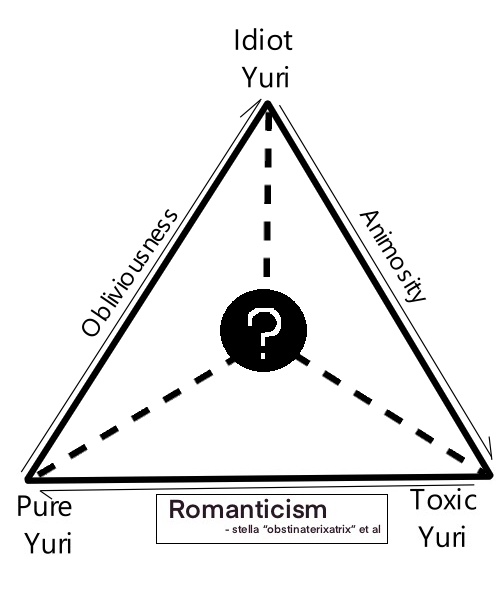
Is there utility in doing so? And if so, could this triangle be…
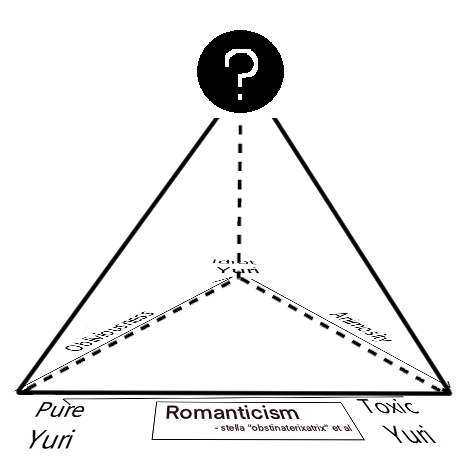
A pyramid? Or even—
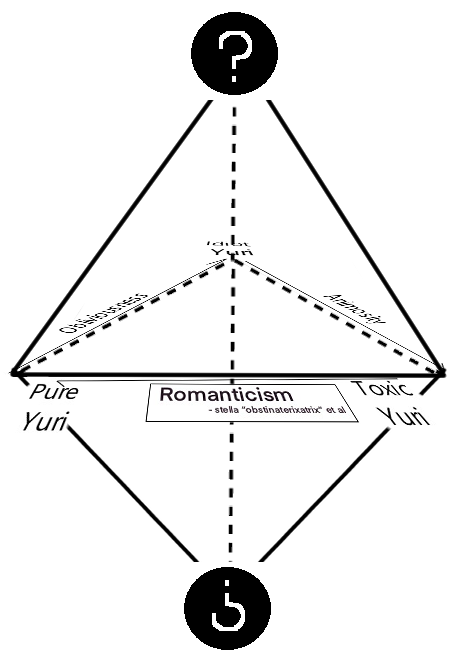
A triangular dipyramid!?
I think I've been working on this essay for too long.
